The research skill is the umbrella for literature work. It composes three tracks — papers, patents, and web & industry — into one investigation and one report. Turn a track off in Customize and the skill skips it; leave all three on and it decides per question which ones matter.
When to use it
Any question that starts with "what is known about…": a field overview before a grant, a targeted check before a study, a technology landscape before a patent filing. For a single fact with a source, use /fact instead; for a full study plan, /study.
How to call it
text
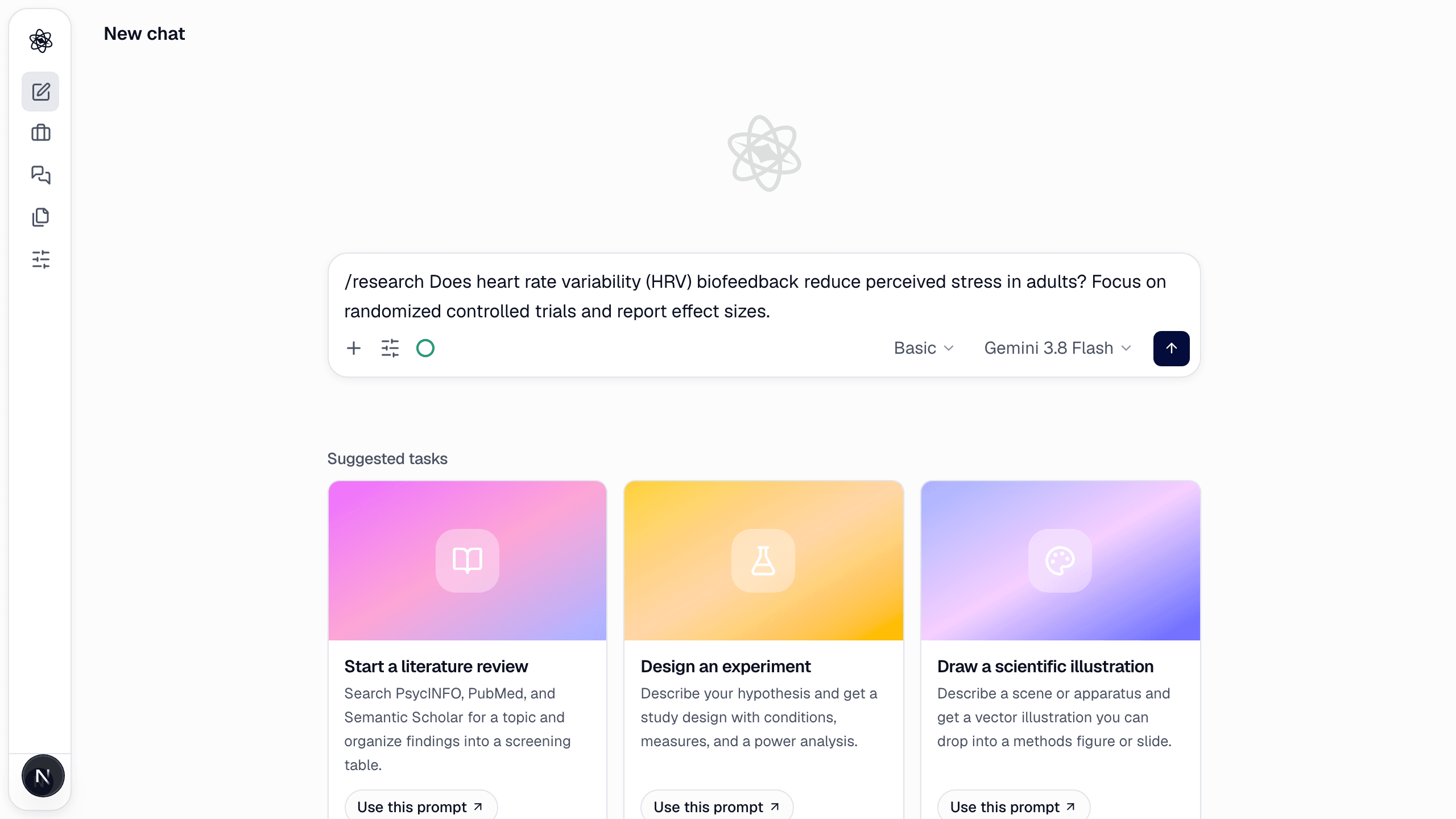
/research Does heart rate variability (HRV) biofeedback reduce perceived stress in adults? Focus on randomized controlled trials and report effect sizes.
Or describe what you want without the command — the router picks the skill. Effort matters: Lite is a quick scan, Basic a full review, Deep adds a review pass over the report.
What happens
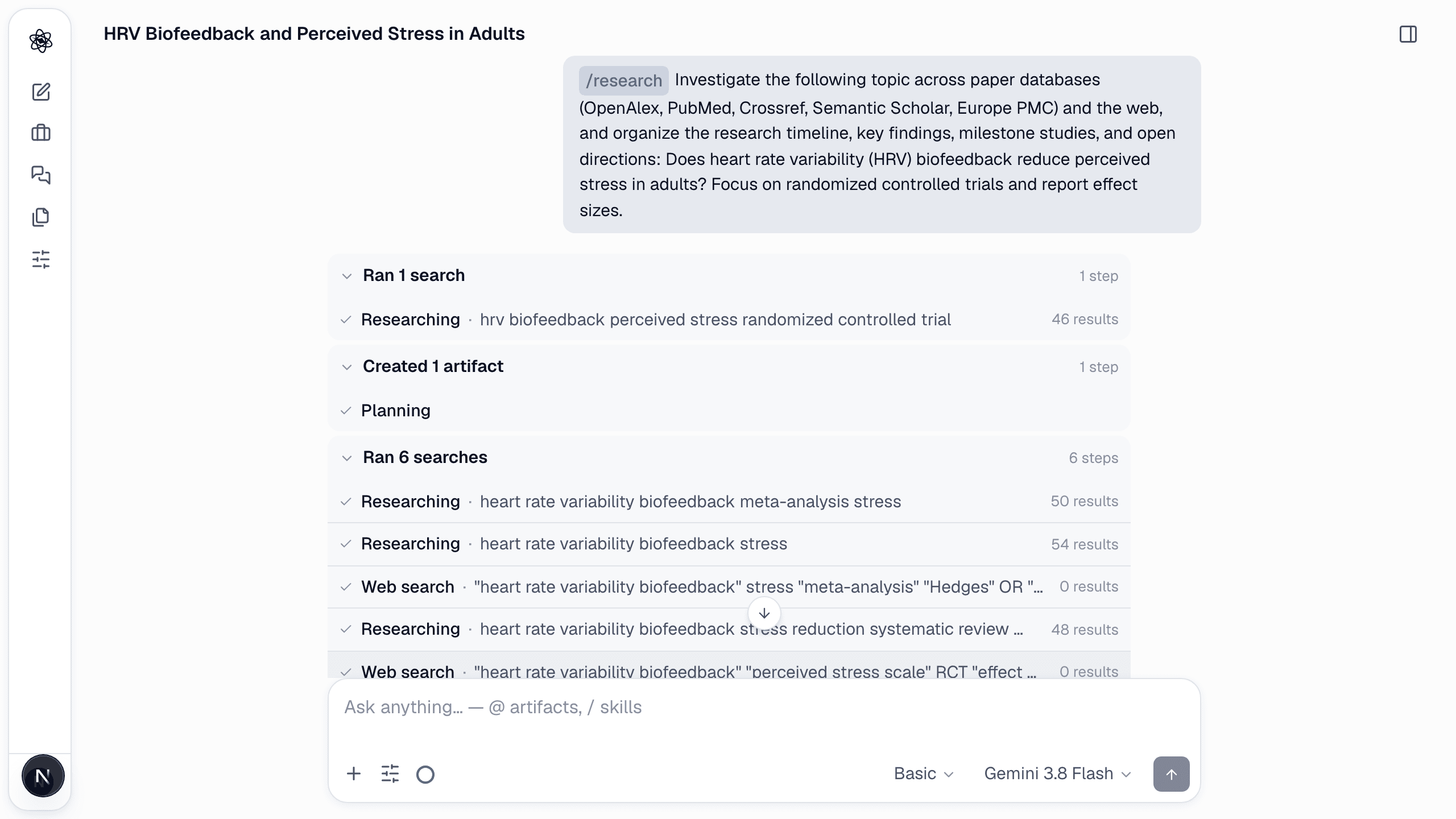
- Clarify. If the scope is ambiguous it asks one round of questions (source types, journal tier, time window). "Skip the rest — search now" is always available.
- Plan keywords, then search in parallel across OpenAlex, PubMed, Crossref, Semantic Scholar, Europe PMC, ERIC and arXiv — plus Scopus, Web of Science and KCI when your institution's access is connected — with web searches for the meta-analyses and reports it found by name.
- Read: it opens the full text of load-bearing sources rather than trusting abstracts, and verifies each source before citing it.
- Write: a report where every sentence carries an [n] citation; uncited claims are removed.
What you get
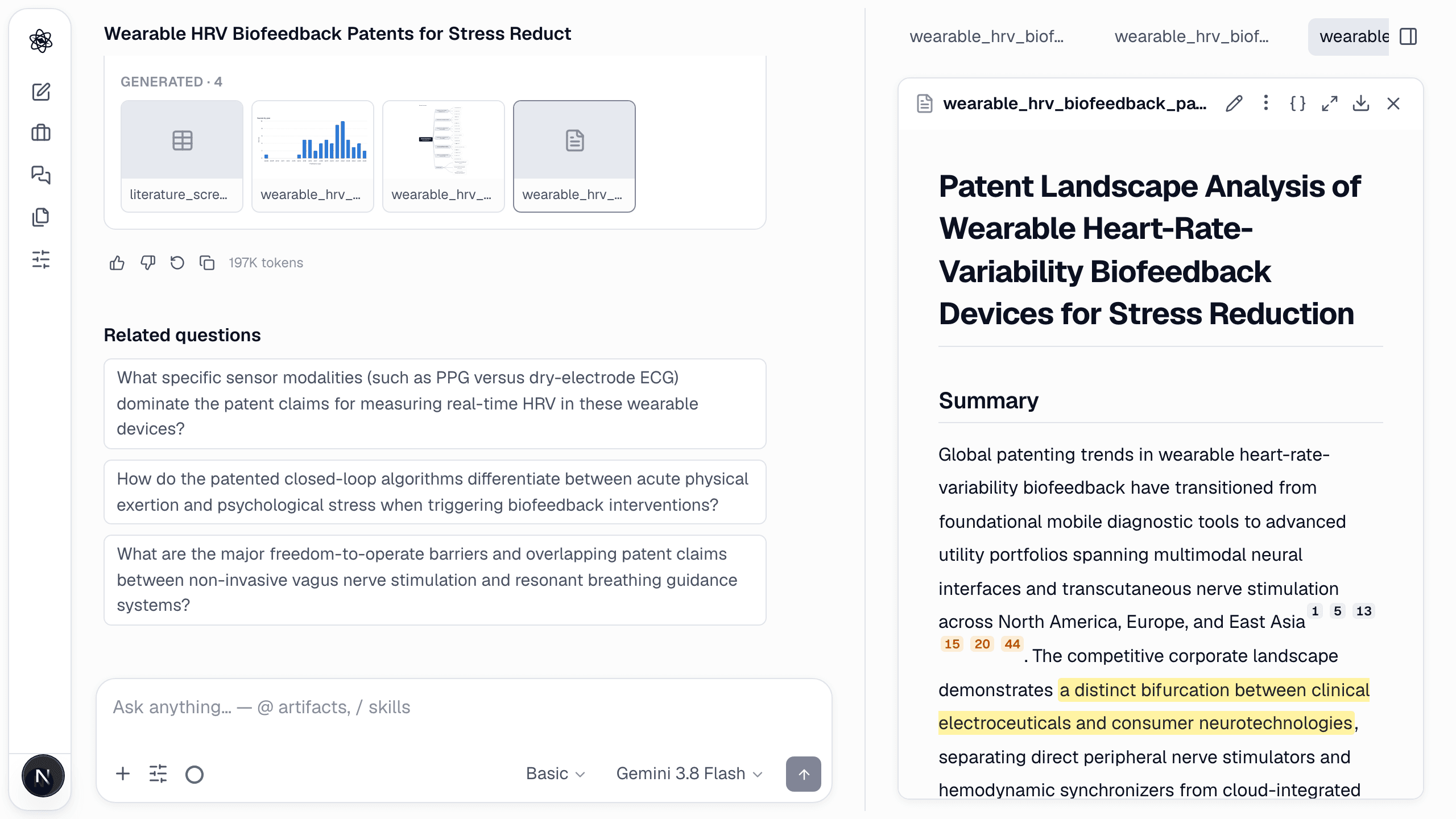
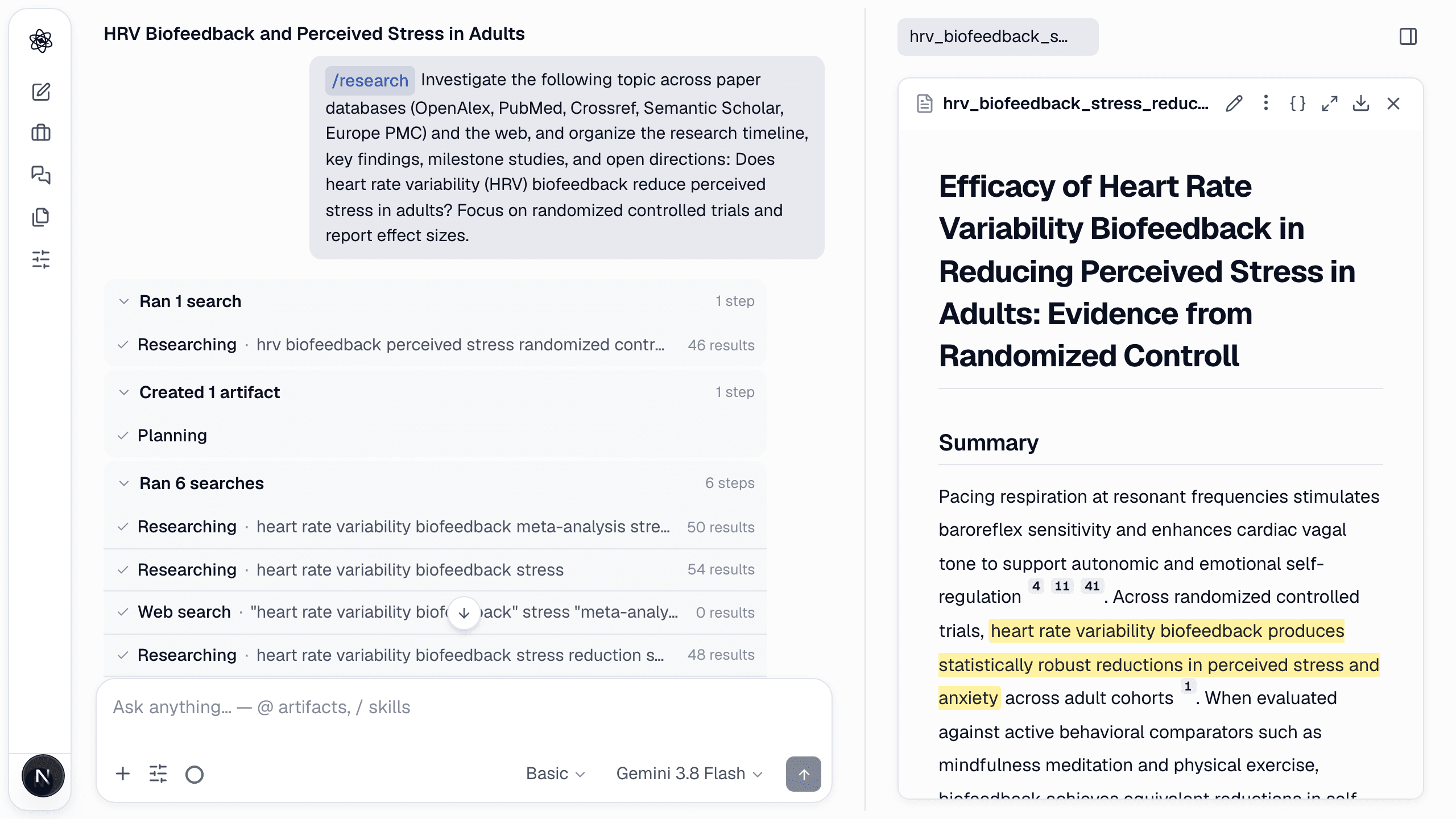
- The cited review report (Markdown, editable in the panel, exportable).
- A literature screening table (sources with venue tier, year, importance), a sources-by-year chart, a citation graph and a research mind map.
- The sources themselves stay in the session — the design, analysis and manuscript steps cite them by number.
Composed of
- research-paper — the academic track.
- research-patent — the patent track (/patents).
- research-web — web & industry sources.
Tips
- Ask in the language you want the report in — the first message sets the session language.
- Name the study type you care about ("randomized controlled trials", "longitudinal cohorts") and the skill filters for it.
- Re-run the same question later: new publications flow into the same structure with changes highlighted.