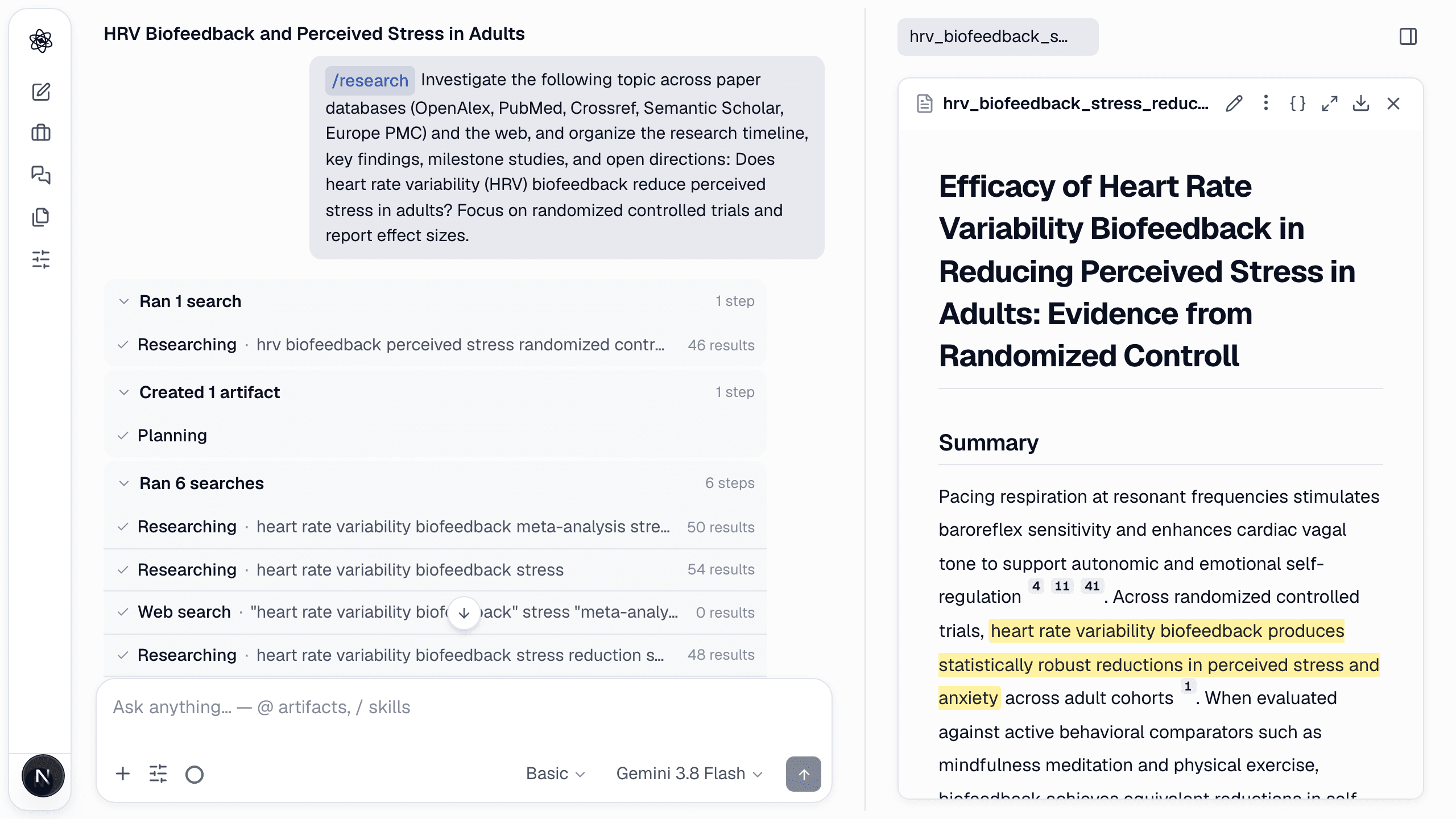
research-web is the track for sources that are not papers or patents: company and institutional reports, standards, regulatory documents, product pages, news. Its job is to bring them in without blending them with the peer-reviewed evidence.
How to call it
text
/research-web Adoption of remote photoplethysmography in consumer wellness apps, 2023–2026
Or leave it on inside /research: the umbrella uses it for the meta-analyses, guidelines and reports it discovers by name.
What happens
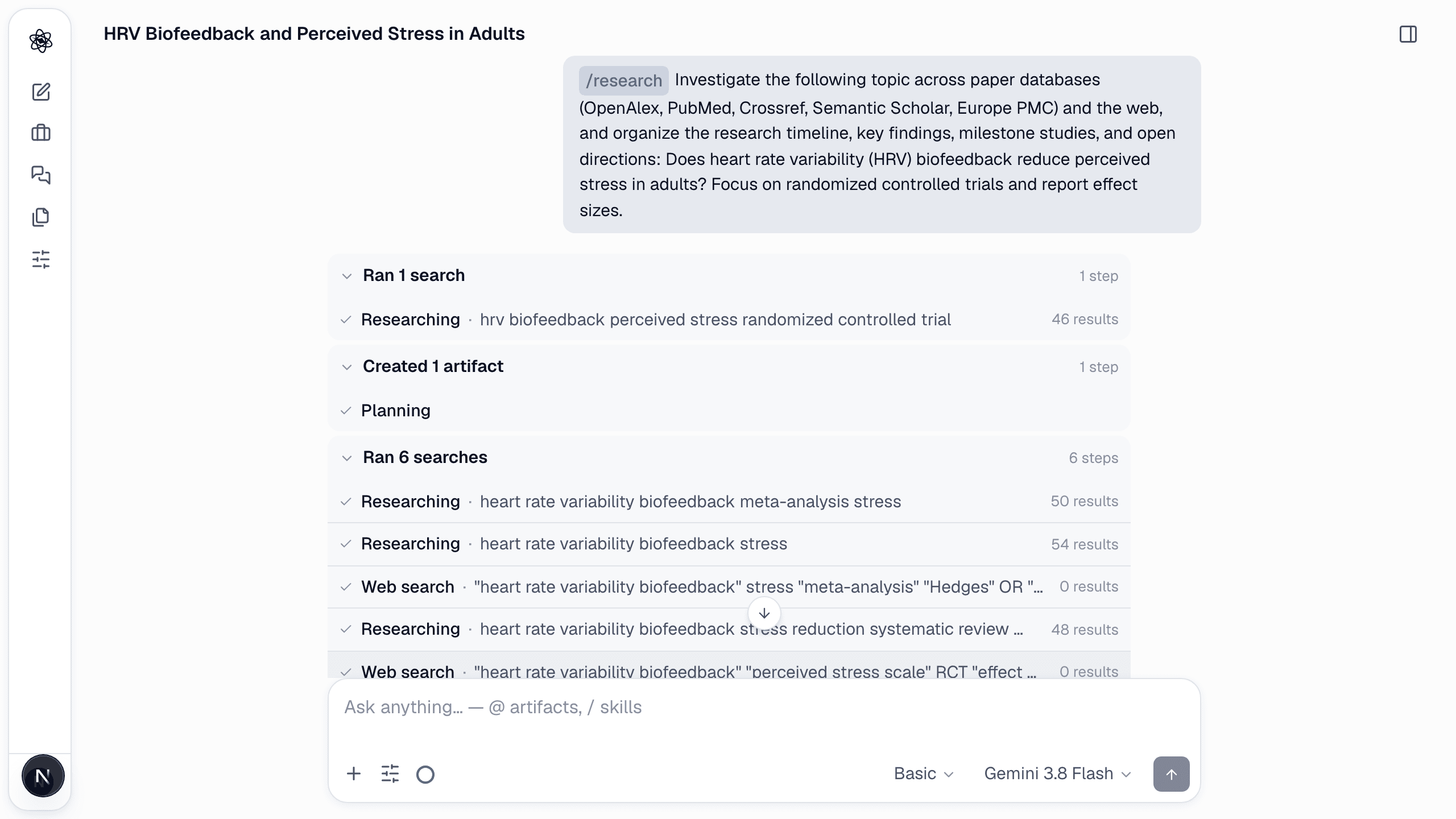
- Web searches with query variants, then full-page reads of the pages that matter.
- Every source is labelled by kind — official filing, institutional report, vendor page, news, blog — and the label travels with the citation.
- Claims from industry sources are attributed to who made them; they never appear as consensus.
What you get
- A report with the same [n] citations as the academic track, with source kind visible on each.
- Page reads stored as sources so later steps can quote them.
Tips
- For a single sourced fact, /fact is faster.
- Name the organisations you trust ("WHO, FDA, the manufacturer's own documentation") and the track prioritises them.