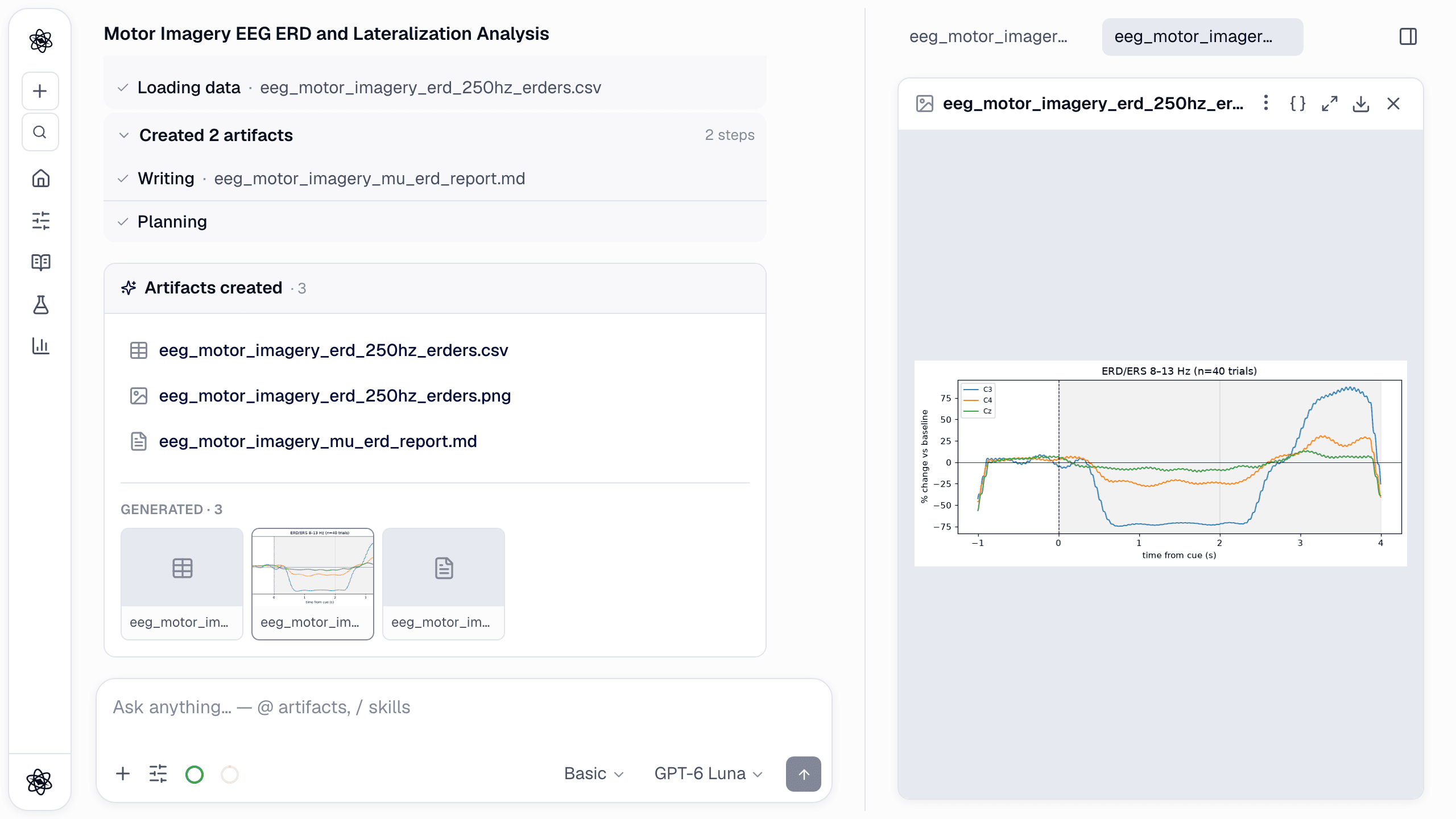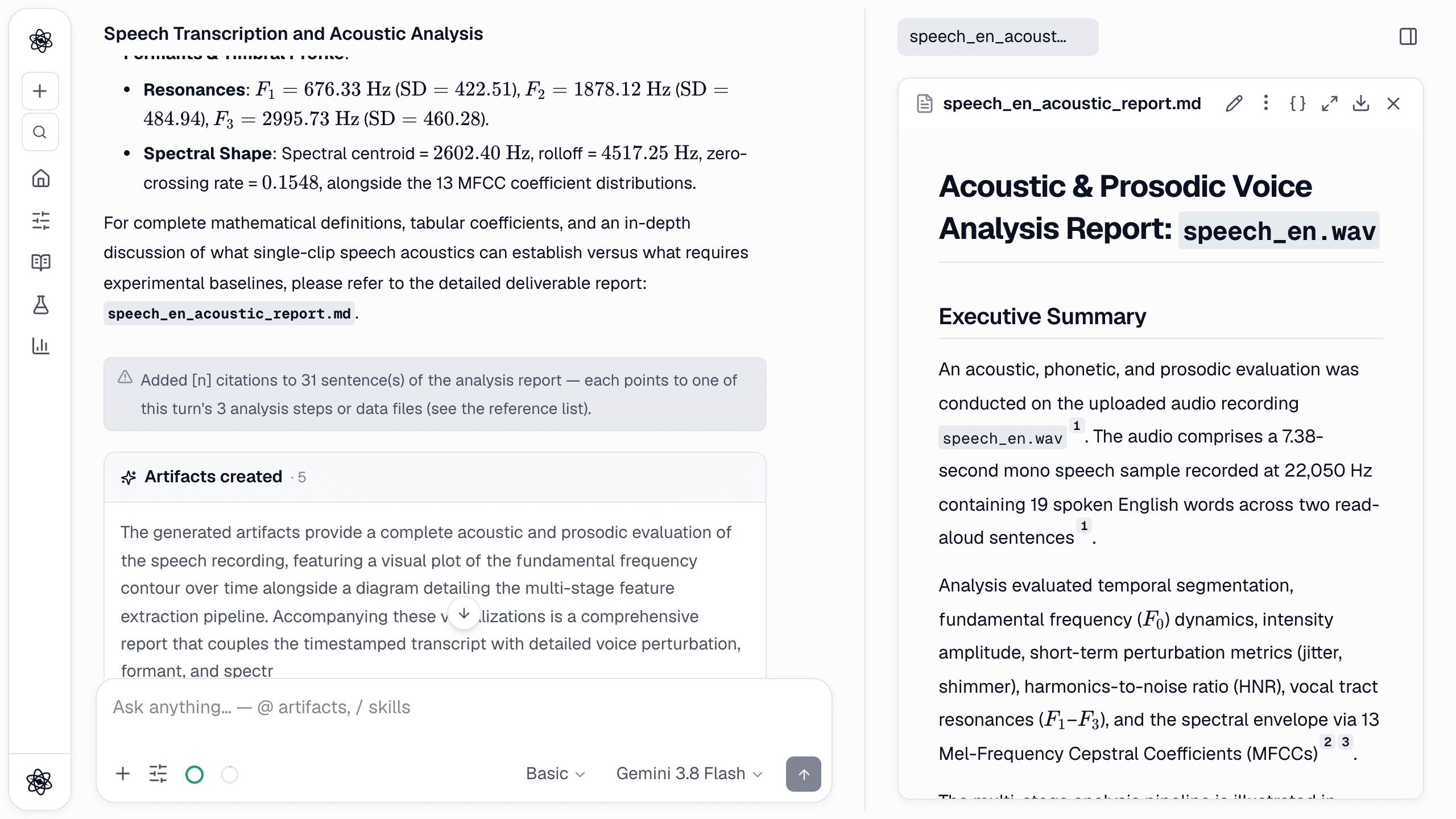
A good hypothesis is a chain of reasoning: from what the field knows, through a gap or a conflict, to a prediction someone could bet against. In most labs that chain lives in one researcher's head. Neutropic makes it an artifact you can inspect, debate, and hand to a study design. Here is the step continuing the same session as the literature review — the sources collected there are what the agent reasons from.
Step 1 — Ask for hypotheses, in the same chat
You don't re-upload or re-search. The /hypothesis command reads the literature already in the session (137 sources in this run) and, if the evidence is thin somewhere, runs a bounded number of extra searches before it starts reasoning.
/hypothesis From the literature collected in this session on HRV biofeedback and perceived stress, map the research space, list the gaps and contradictory findings, and generate testable hypotheses ranked by novelty, plausibility, and testability, each with its rationale and sources.
Step 2 — See the map before the predictions
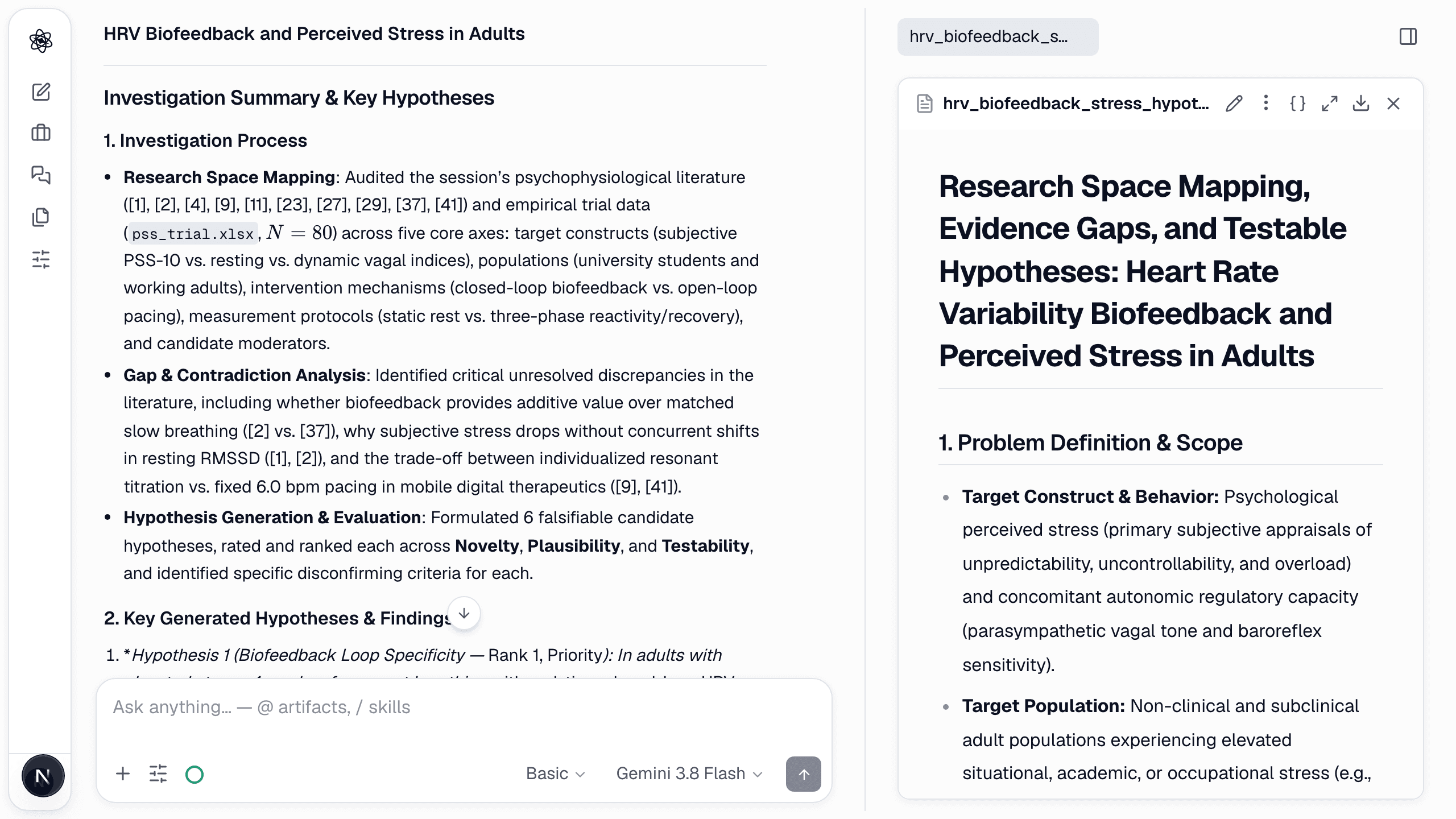
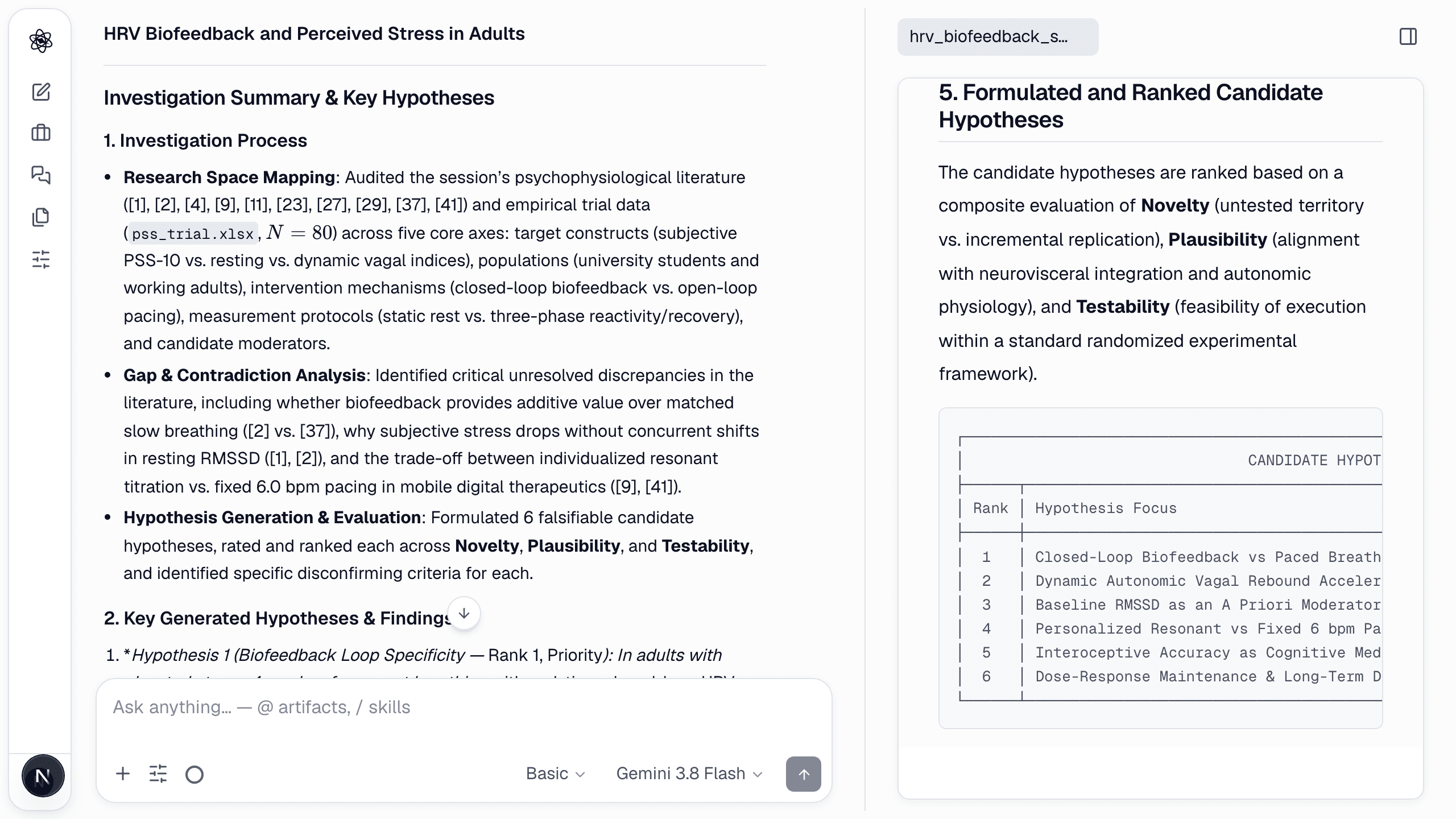
The agent first lays out the research space — constructs, populations, comparators, outcomes — and identifies where the evidence is thin, where results conflict (for example, active-control comparisons versus wait-list controls) and which moderators remain untested. Contradictions are listed with the studies on each side, so the disagreement is visible rather than averaged away.
Step 3 — Read the ranked hypotheses
Each candidate hypothesis states its expected direction, the constructs involved and the rival explanations it would have to rule out, and cites the studies that motivate it. The list is ranked on three axes — novelty, plausibility and testability — with the score and the reasoning for each shown, so you can disagree with the ranking on the record.
Step 4 — Constructs, defined before they're measured
Vague constructs sink studies late, when the measures don't match the claims. Neutropic forces the discipline early:
- Each construct in a hypothesis gets an explicit working definition.
- Established instruments that measure it are suggested from the literature, with their reliability where reported.
- Where the field measures a construct in conflicting ways, the conflict is flagged rather than resolved silently.
Step 5 — Hand it to the study design
The hypothesis set is saved as a structured artifact (a Markdown report plus a machine-readable JSON). The experiment-design step reads it directly — the chosen hypothesis becomes the study's primary outcome, and its cited sources become the reference designs the protocol is grounded in.
A hypothesis you can trace is a hypothesis you can defend — to a reviewer, and to yourself six months later.