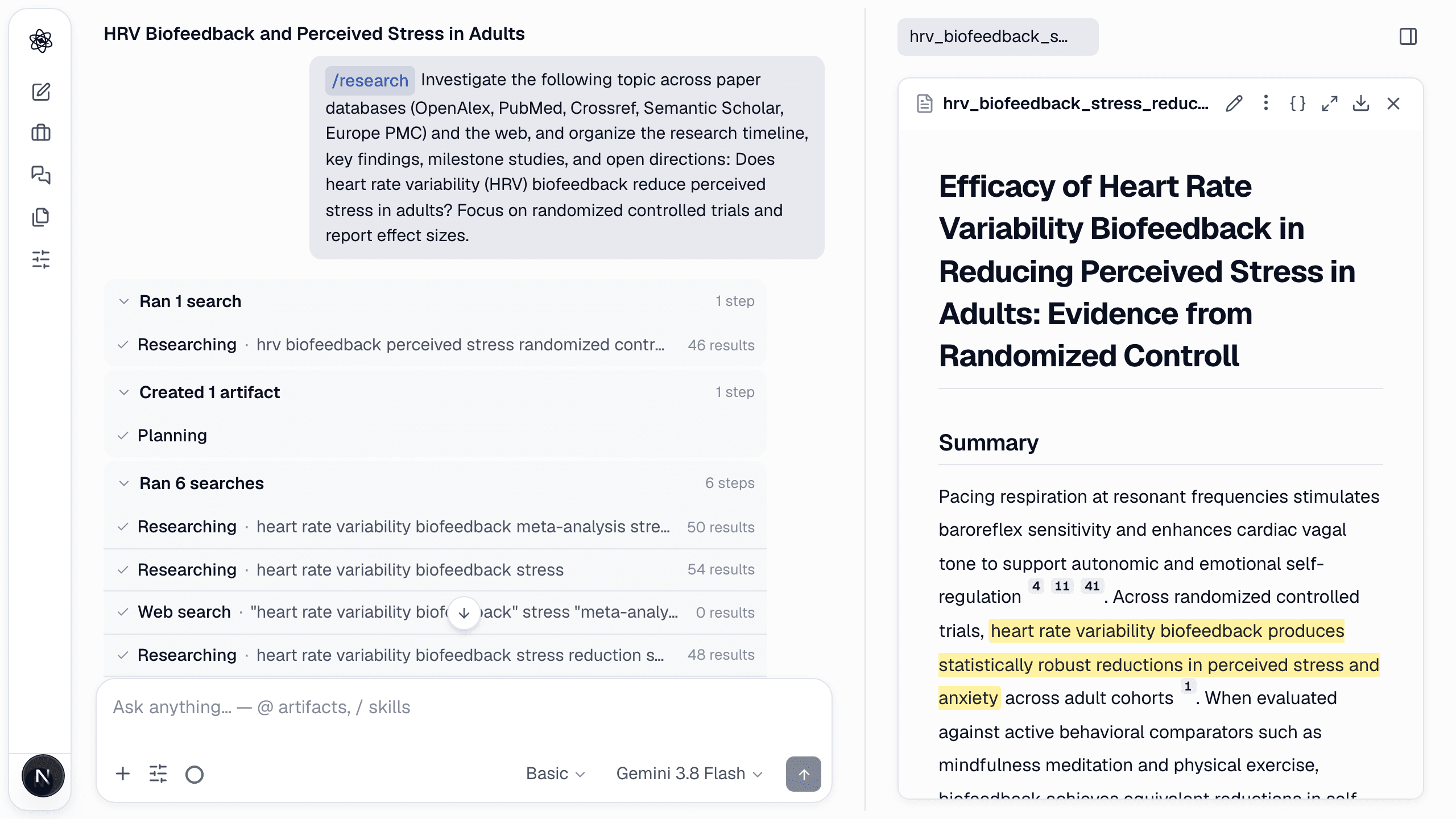
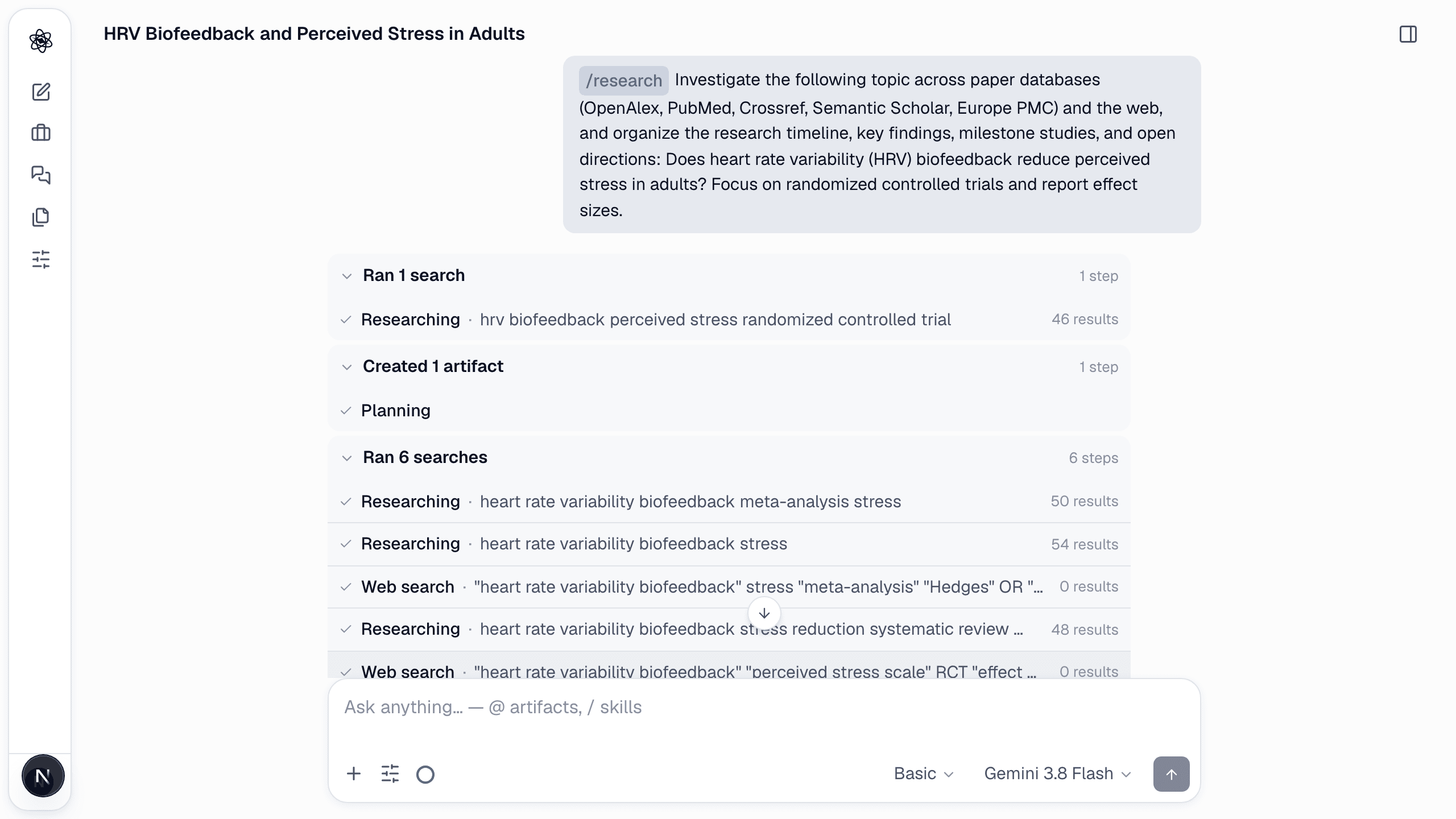
hypothesis turns the literature already in a session into a ranked set of testable hypotheses, each with its rationale and sources. It reuses the sources a /research turn collected and only searches further where the evidence is thin.
How to call it
text
/hypothesis From the literature collected in this session on HRV biofeedback and perceived stress, map the research space, list the gaps and contradictory findings, and generate testable hypotheses ranked by novelty, plausibility, and testability.
Run it after /research in the same chat; without prior literature it will research first (bounded to a fixed number of searches).
What happens
- Maps the research space: constructs, populations, comparators, outcomes, mechanisms, moderators.
- Lists gaps and contradictions with the studies on each side (e.g. active-control vs wait-list comparisons).
- Generates candidate hypotheses, states each one's expected direction, constructs and rival explanations, and ranks them on novelty, plausibility and testability with the reasoning shown.
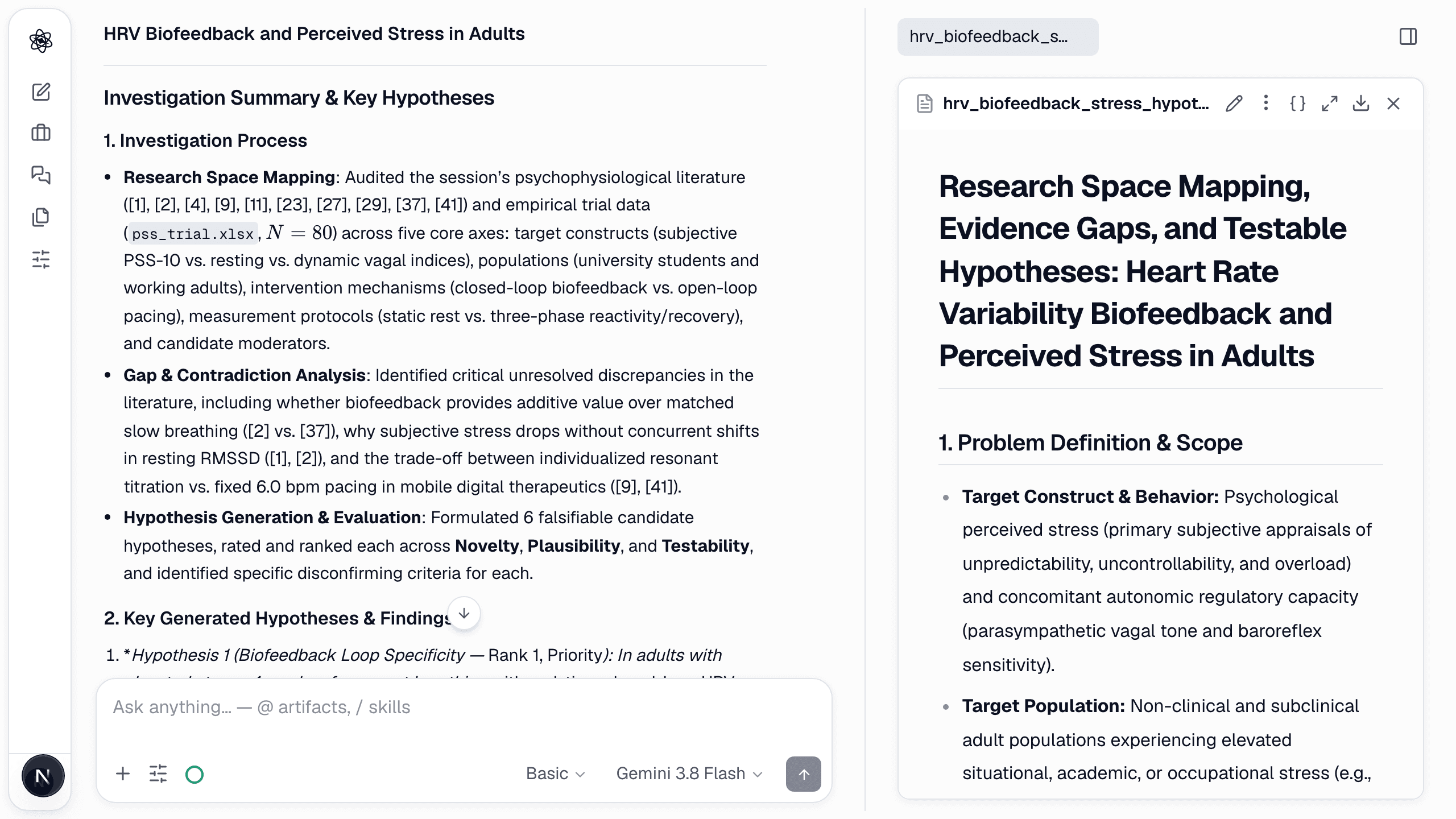
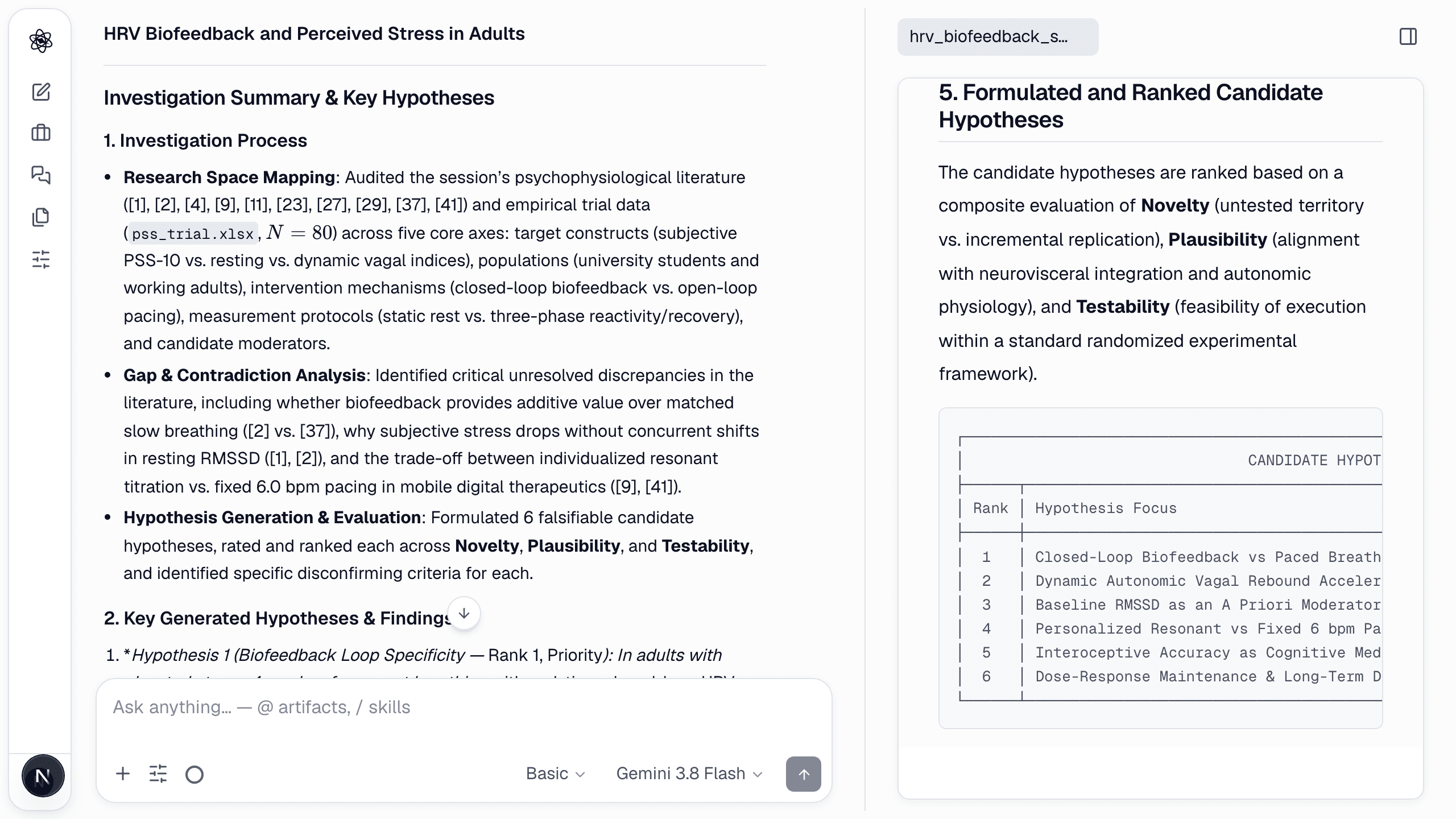
What you get
- The hypothesis report (Markdown) and a structured HypothesisSet (JSON) that the design step reads directly.
Tips
- Say which population or outcome you care about and the ranking weights toward it.
- Accept one and run /experiment-design: the chosen hypothesis becomes the primary outcome.