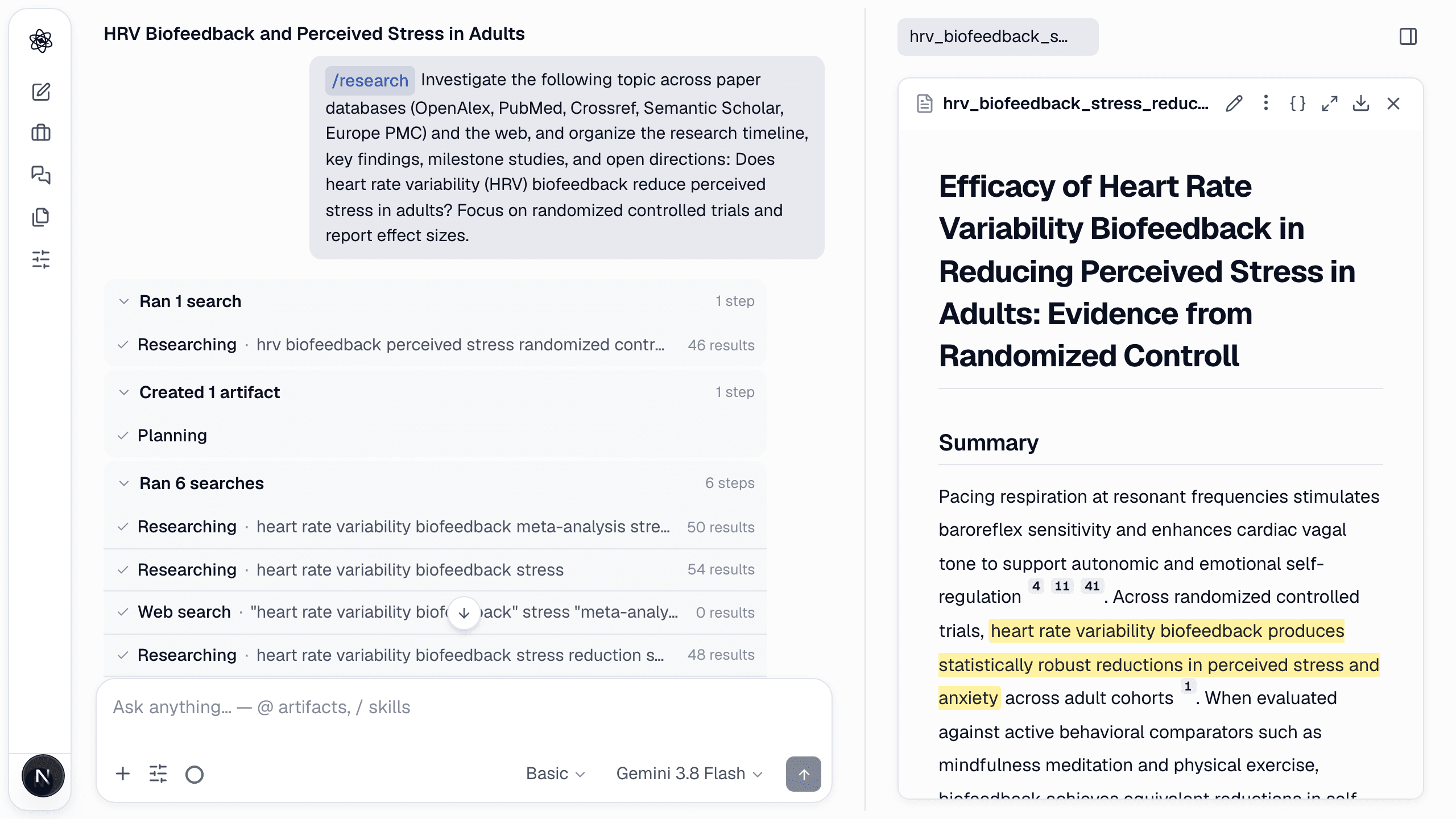
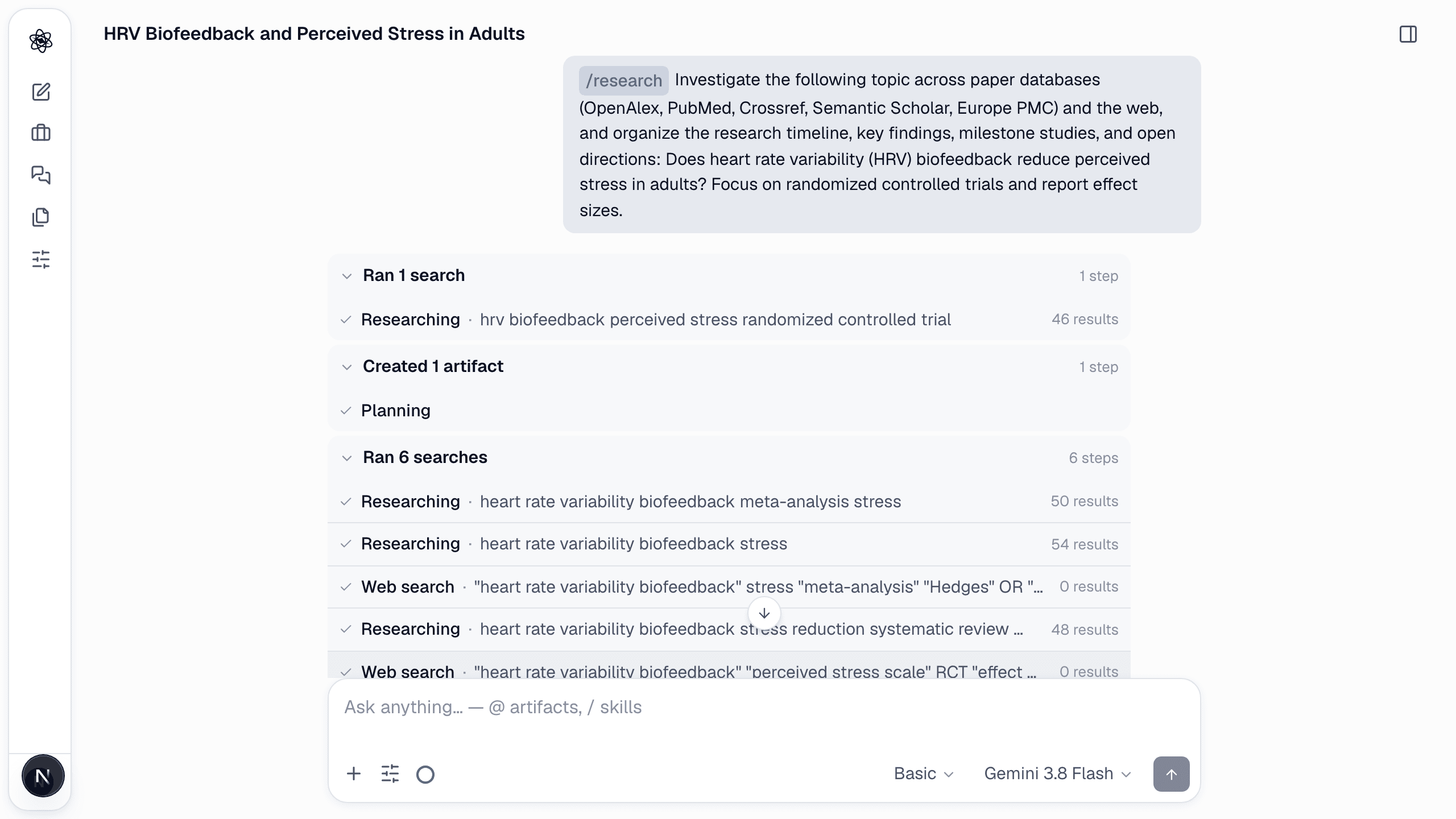
experiment-design turns a hypothesis into a full study design: participants, measures, protocol, constraints and sample plan — each choice grounded in how related studies did it.
How to call it
text
/experiment-design Design a two-arm randomized experiment testing whether a 4-week HRV biofeedback program lowers perceived stress (PSS-10) in university students compared with an active control. Include participants, measures, protocol flow, and a power analysis.
What happens
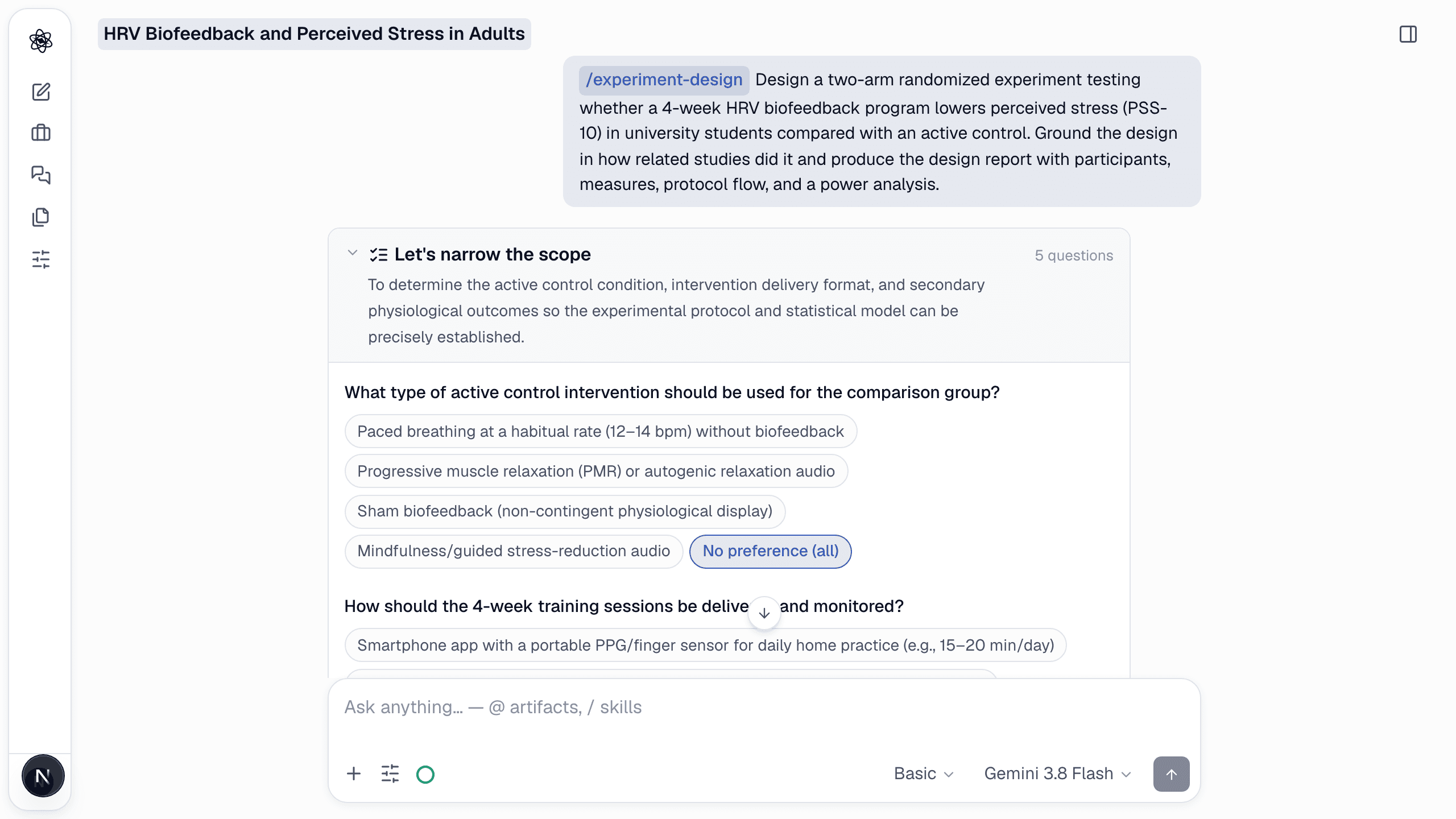
- Asks what it cannot infer — control condition, delivery and monitoring, secondary measures, screening — with chips drawn from the literature. "No preference" and "Skip the rest" are always available.
- Surveys how comparable studies designed theirs and cites the ones it borrows from.
- Writes the design report and draws the figures.
What you get
- The design document: goal · framework · participants · measures · constraints · rationale and source per choice.
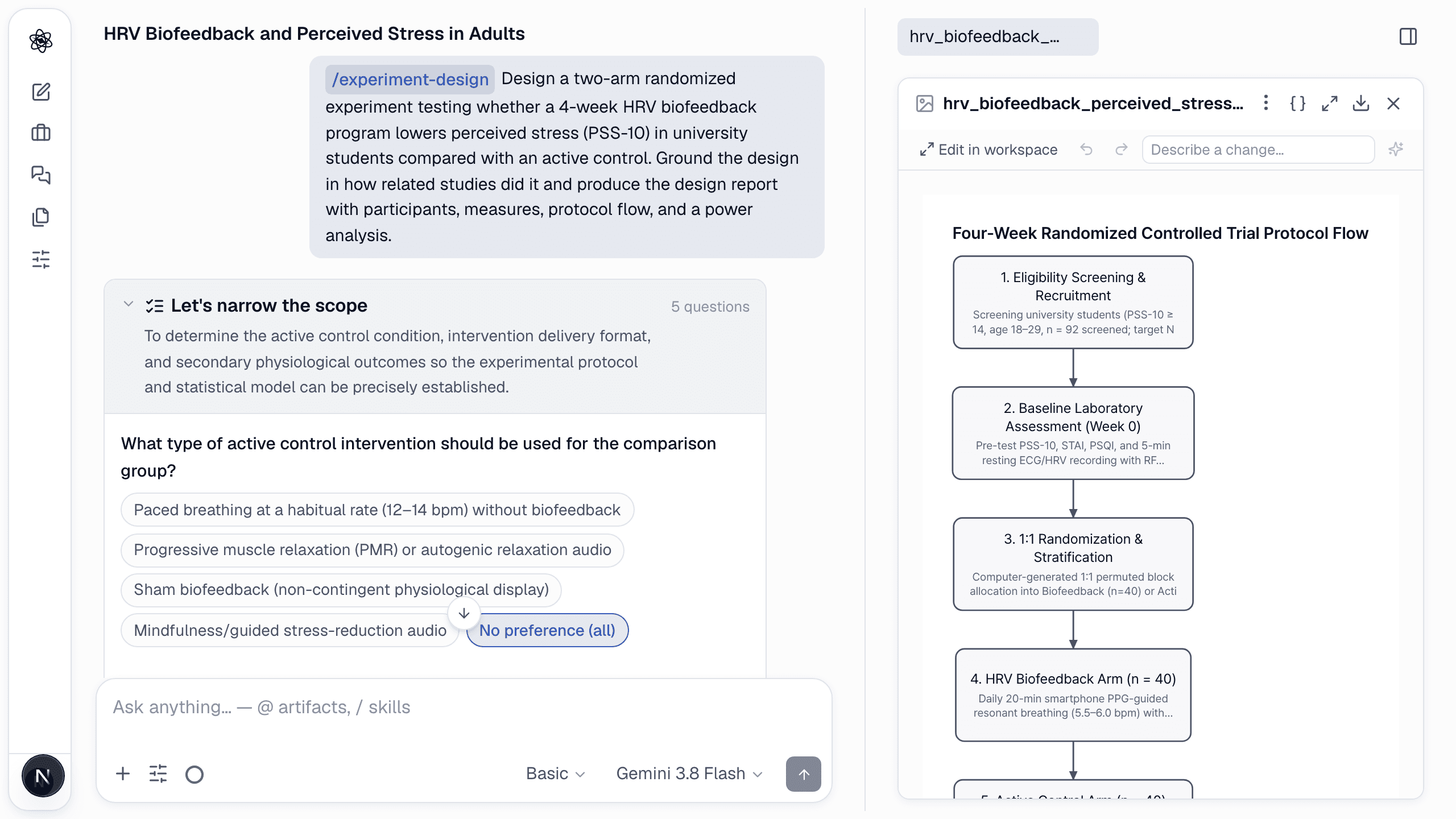
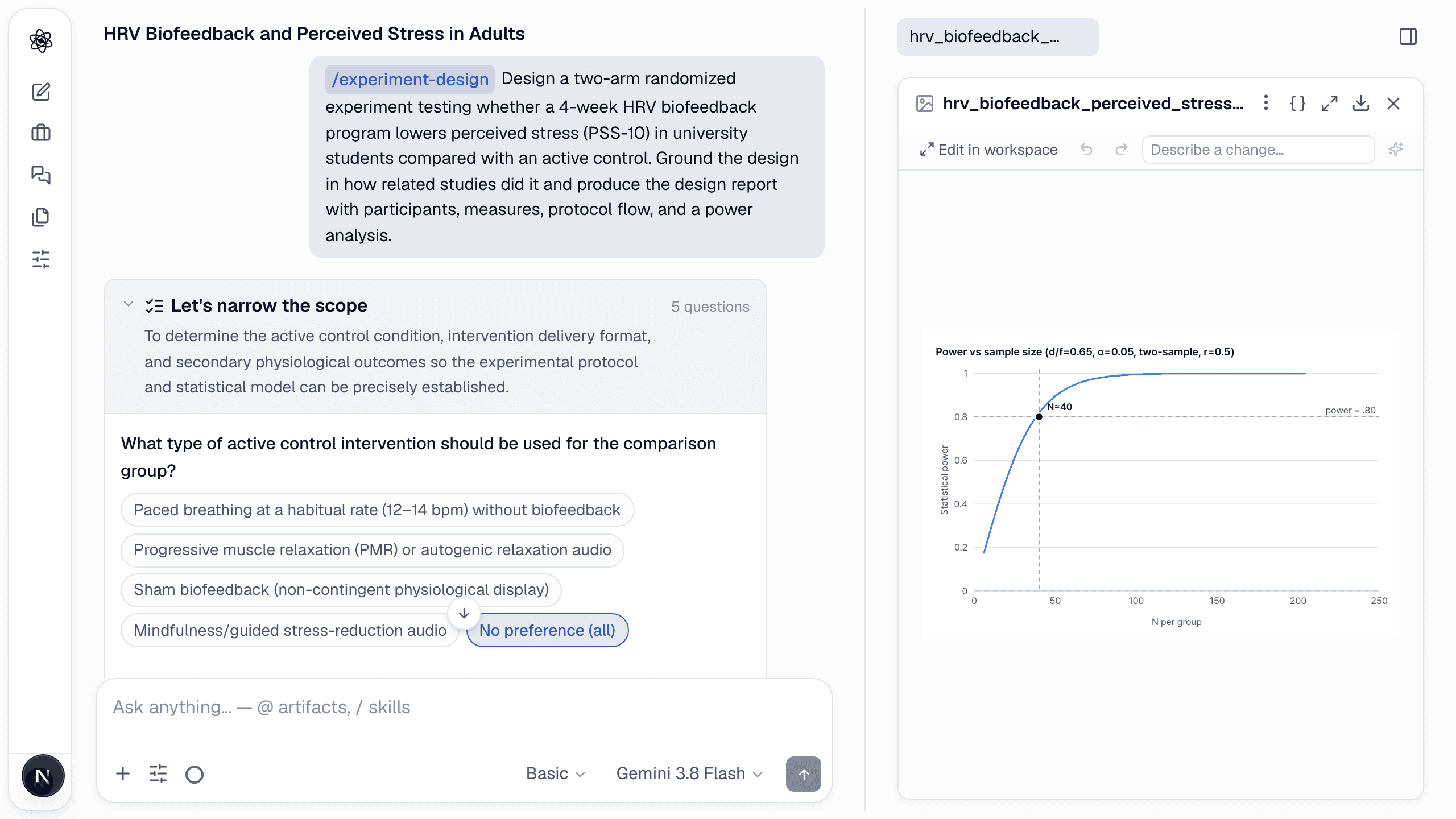
- A protocol flow diagram (editable figure), an expected-results chart and a power curve, plus a summary of the reference studies' designs.
Tips
- Give the effect size you expect (or the reference study) and the power curve is drawn for it.
- On Deep effort the design is reviewed and revised once before it is delivered.