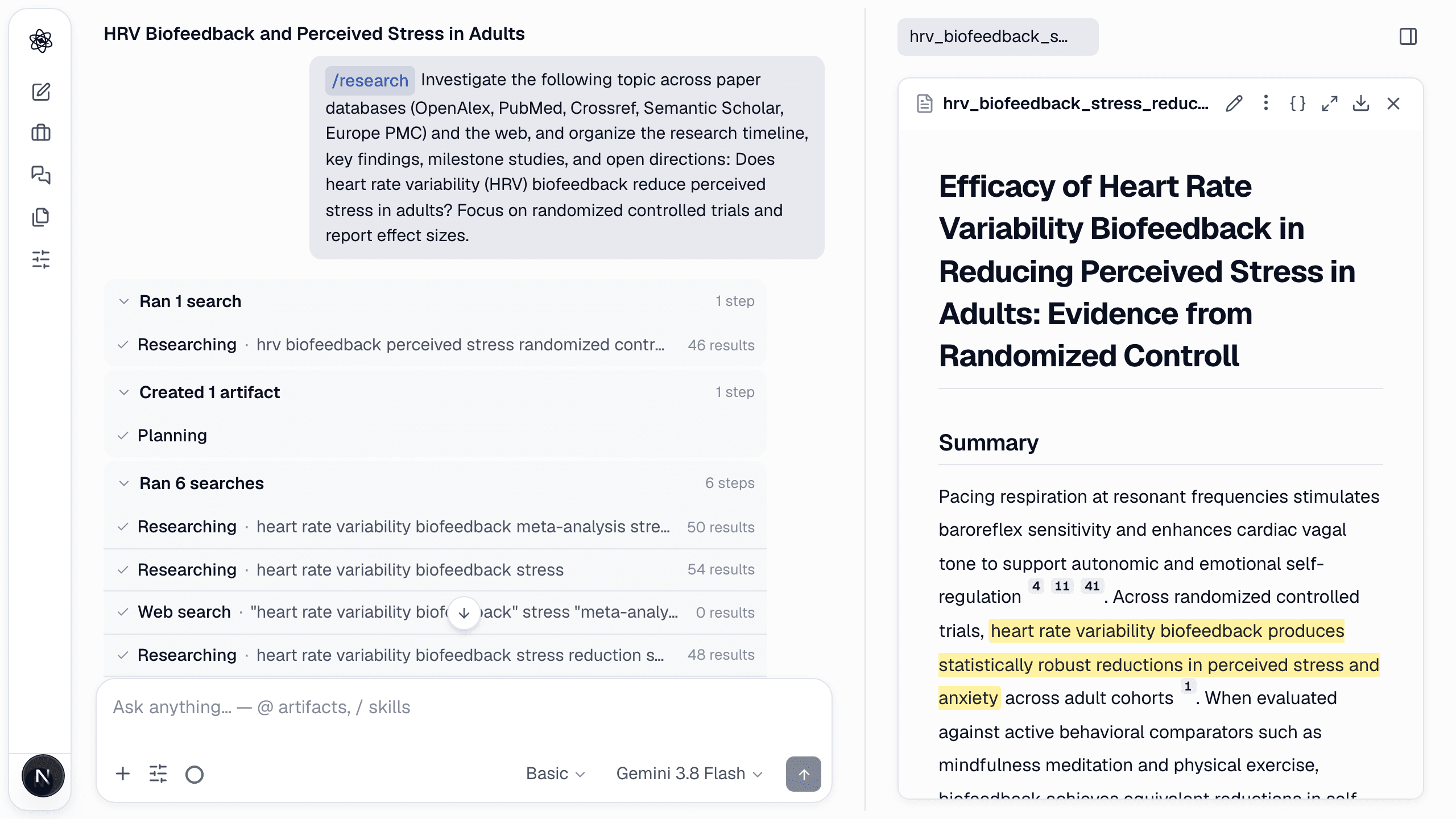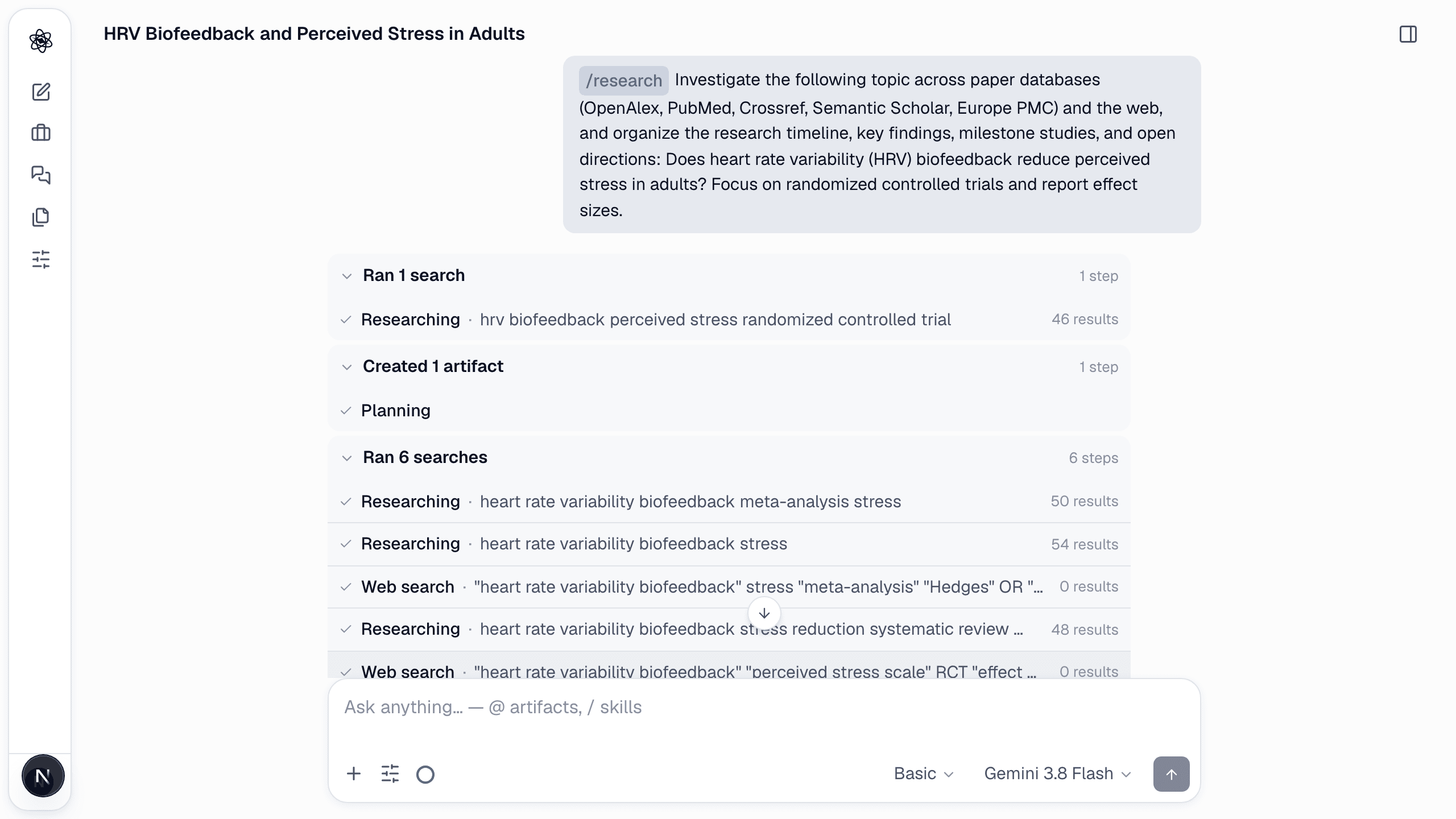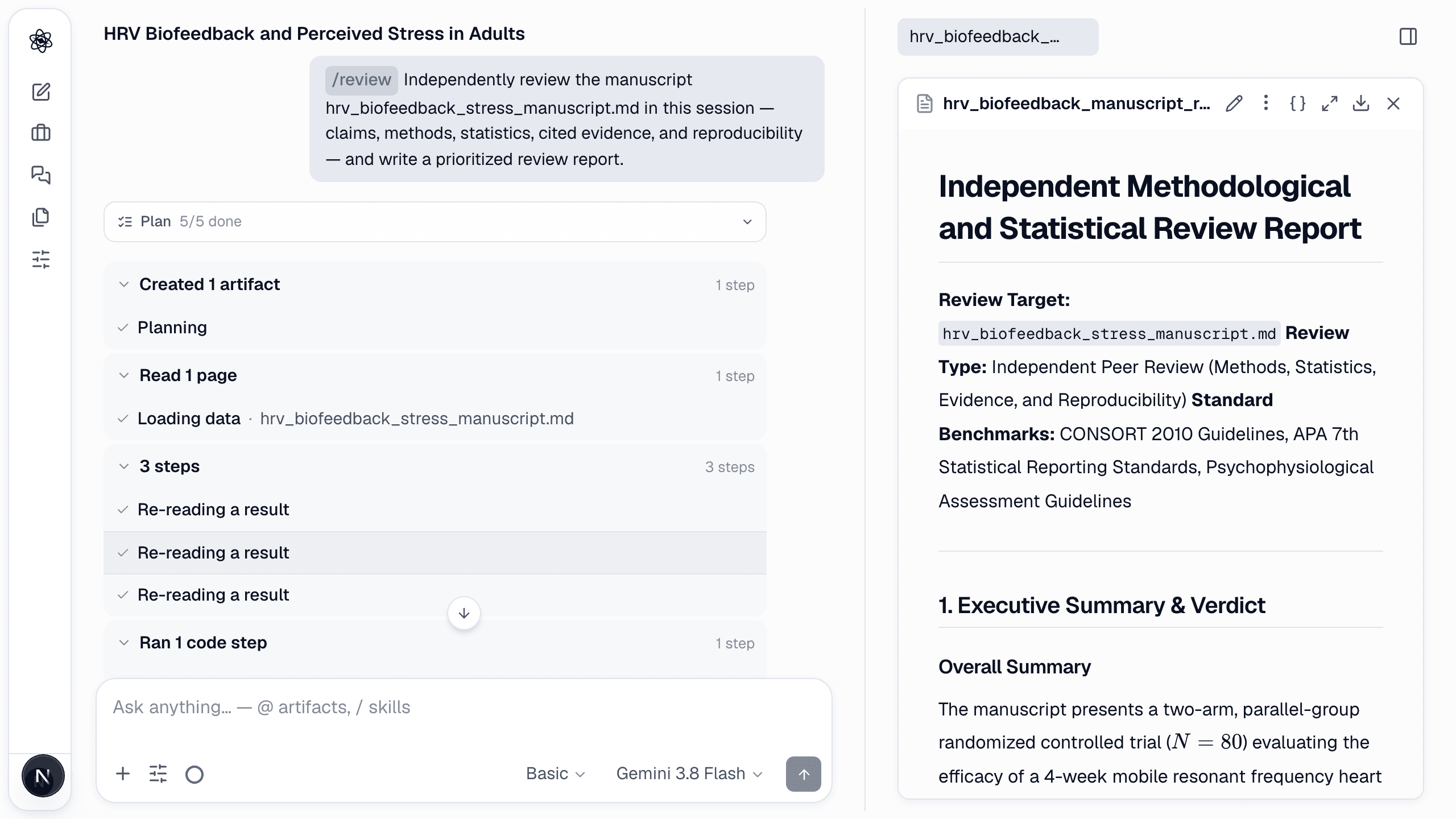
peer-review simulates the editorial process of a specific journal for your own manuscript. It is not a second opinion on a report — it is the referee round you would face after submission, run before you submit.
How to call it
text
/peer-review Mock-review the attached manuscript for Applied Psychophysiology and Biofeedback.
Attach the manuscript (PDF, DOCX or Markdown) or point at one written in the project. Name the journal; if you do not, the skill infers one from the manuscript and says so. Paste the author guidelines when the journal's site cannot be read.
What happens, in order
- Journal profile — OpenAlex/Crossref metadata and the aims & scope and author-guideline pages; every rule in the report carries its source page, and rules not found are marked not verifiable.
- Comparable papers — the journal's recent papers on your topic, cited as [n], and the venues that publish similar work.
- Deterministic checks — your manuscript against the journal's rules, a sample of references verified at Crossref, and p-values recomputed from the reported statistics.
- Five reviewers in parallel — journal fit, methodology, domain expert, broader perspectives and a devil's advocate — each scoring fit · novelty · rigor · evidence · presentation · overall on a 1–5 scale with strengths and major/minor issues. Quotes are verified against the manuscript.
- The editor — decision (Accept / Minor Revision / Major Revision / Reject), rulings on reviewer disagreements, a P0/P1/P2 revision guide and the journal recommendation. No Accept while a major issue stands.
What you get
<manuscript>_mock_review.md— decision and editor's letter, the score matrix and reviewer sections, the revision guide with the submission-rule checklist, recommended journals with counts and metrics, and an appendix (journal profile, comparable papers, check results, references). Sentences carry [n] citations.- A decision badge on the document and a structured MockReview JSON.
Tips
- Deep effort verifies more references, recomputes the statistics and adds a second independent reader of the finished report.
- Run it again after revising — the document is updated in place, so you can compare decisions.
- For a methodological review of an analysis or design produced in the project, use /review instead.