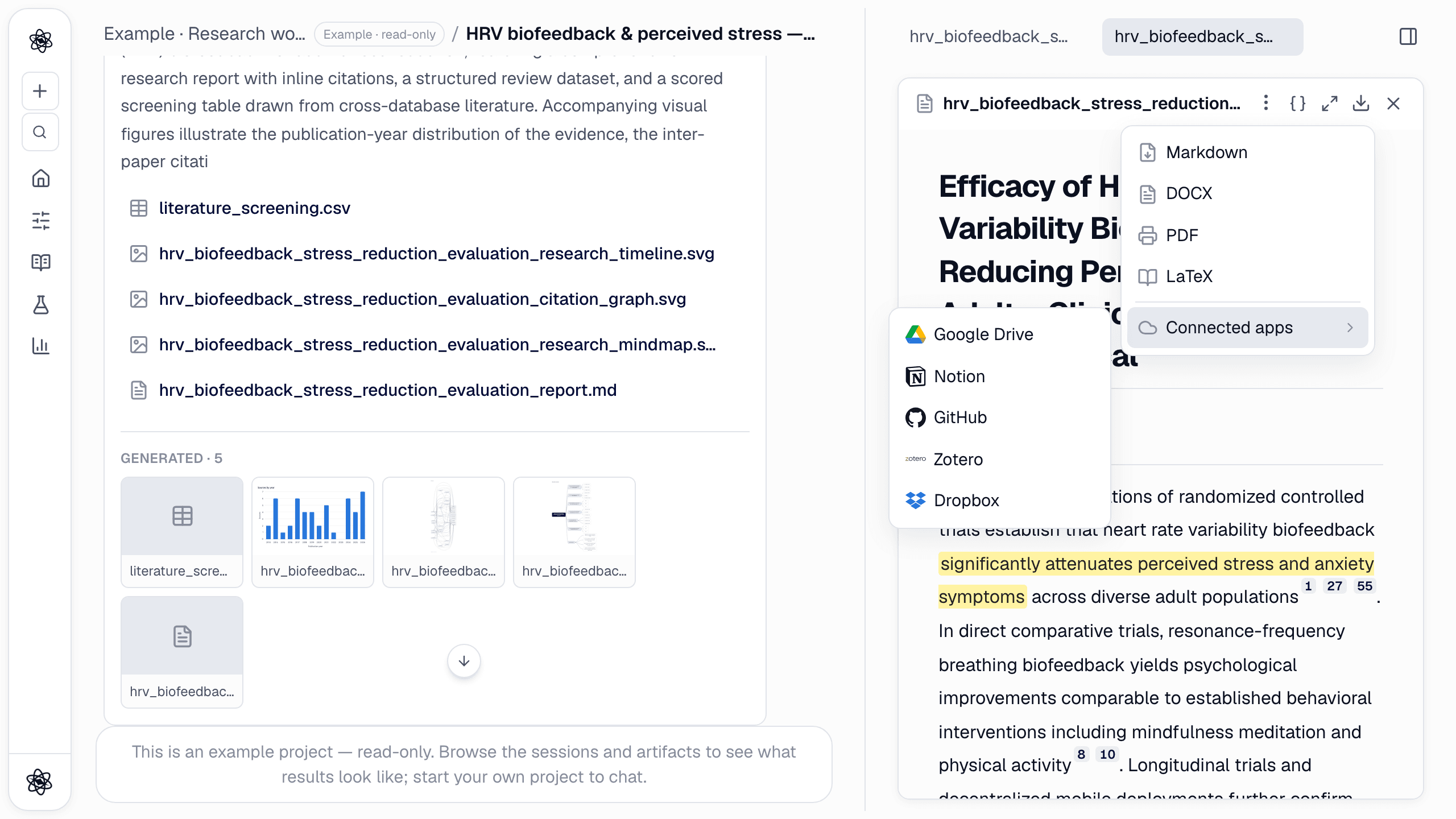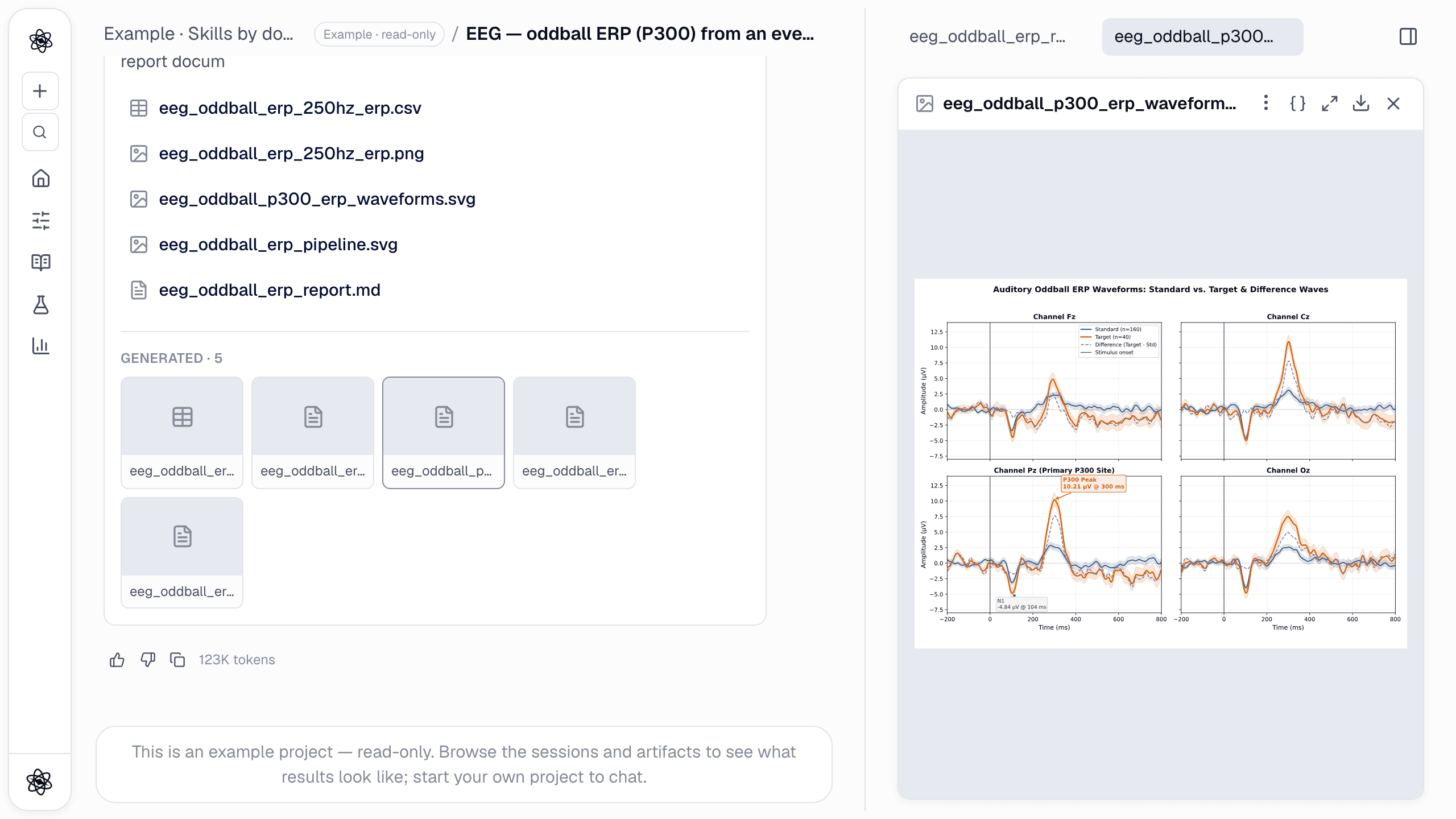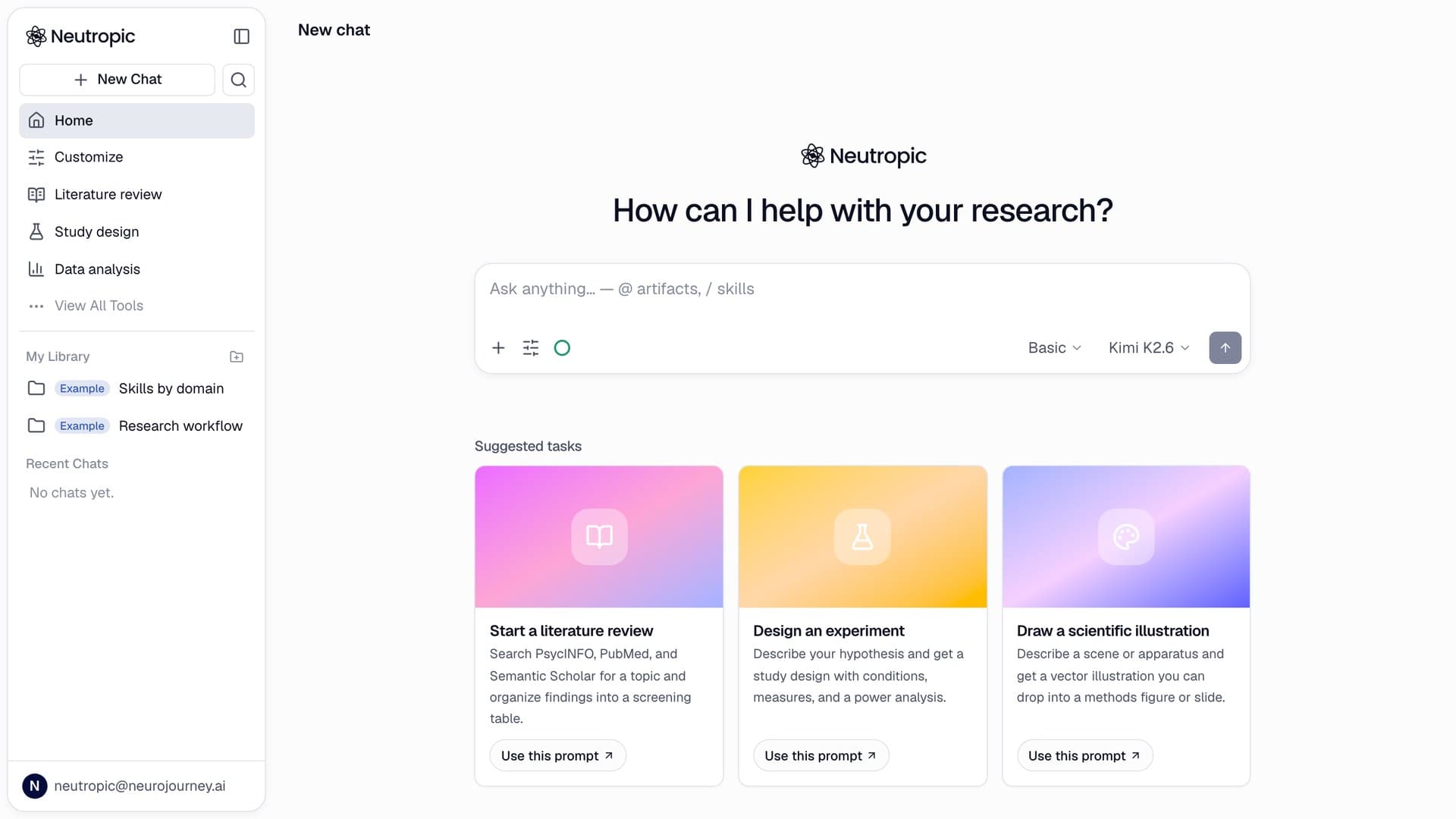
Neutropic 2.0 is the biggest release since we started building a research agent for the human sciences. It rethinks how a research platform should work when your data is people — their answers, behavior, and physiology — and when every claim you publish has to survive review. Everything shown below is the shipping product, captured from real sessions.
One chat, the whole workflow
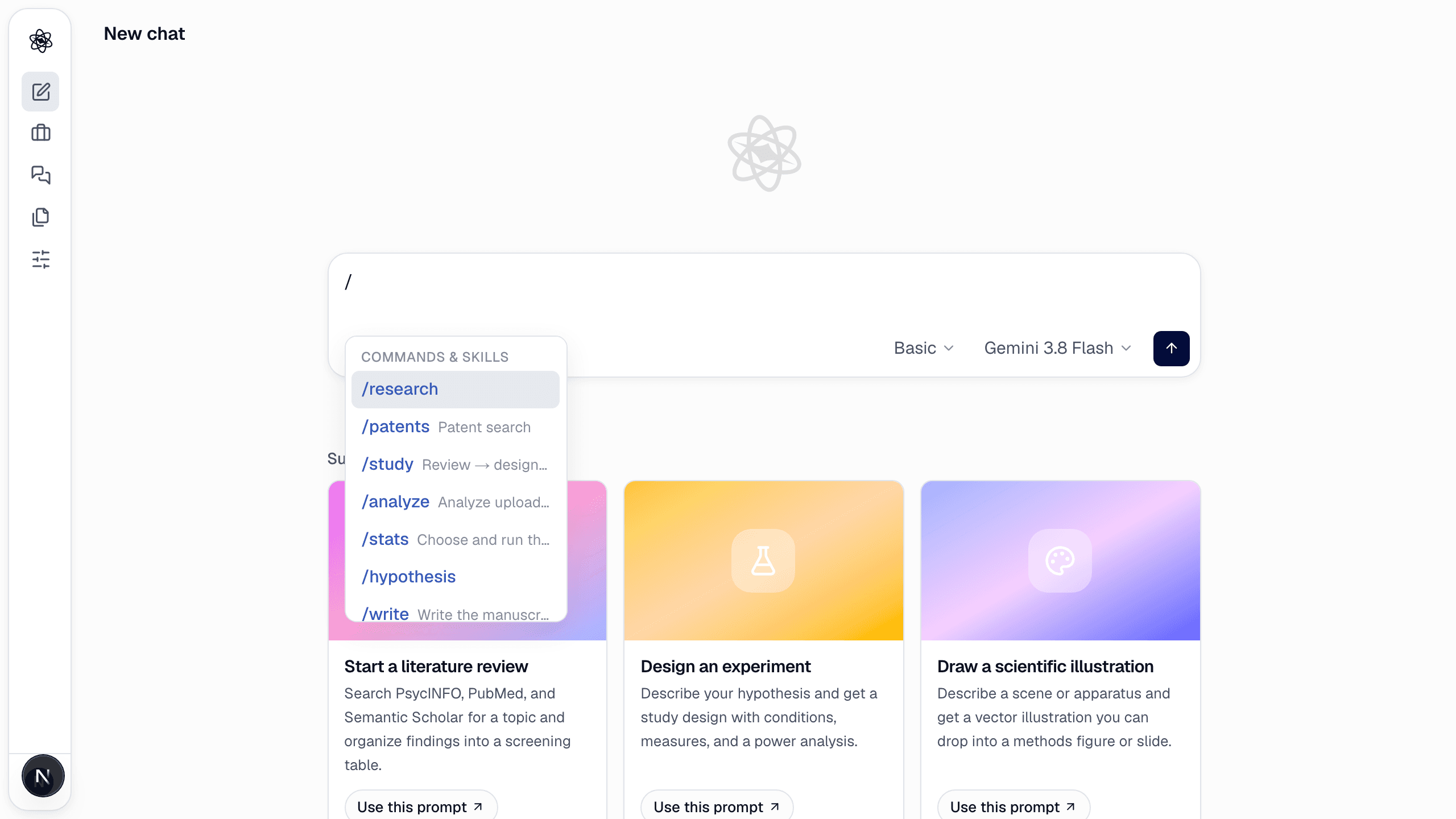
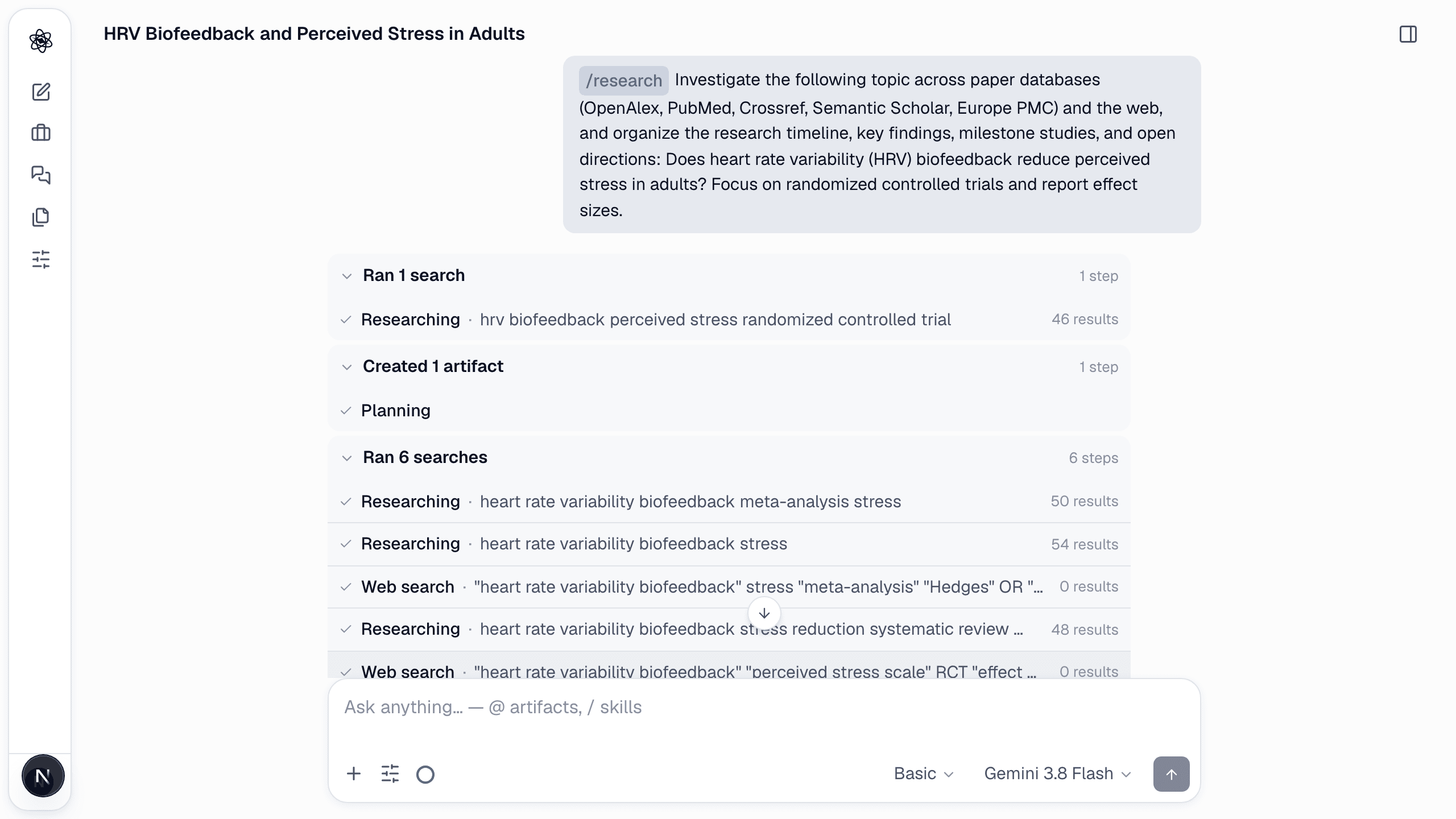
Open a new chat and type a slash: the commands are the research workflow — /research, /hypothesis, /analyze, /stats, /figure, /illustrate, /write, /review. Or just describe what you need and the agent picks the skill. Effort level (Lite · Basic · Deep) and the model sit next to the send button.
A rebuilt agent loop
The agent loop is now built in-house, end to end. That means:
- Literature search, study design, analysis, and reporting run as one connected workflow instead of disconnected chats — a design step reads the literature already in the session, a manuscript reads the analyses.
- Every tool call — a database query, a statistics run, a figure render — is shown in the open, so you can audit what the agent actually did.
- A separate review agent checks statistical validity before results reach you: assumption violations, multiple comparisons, sample size, and p-hacking risk.
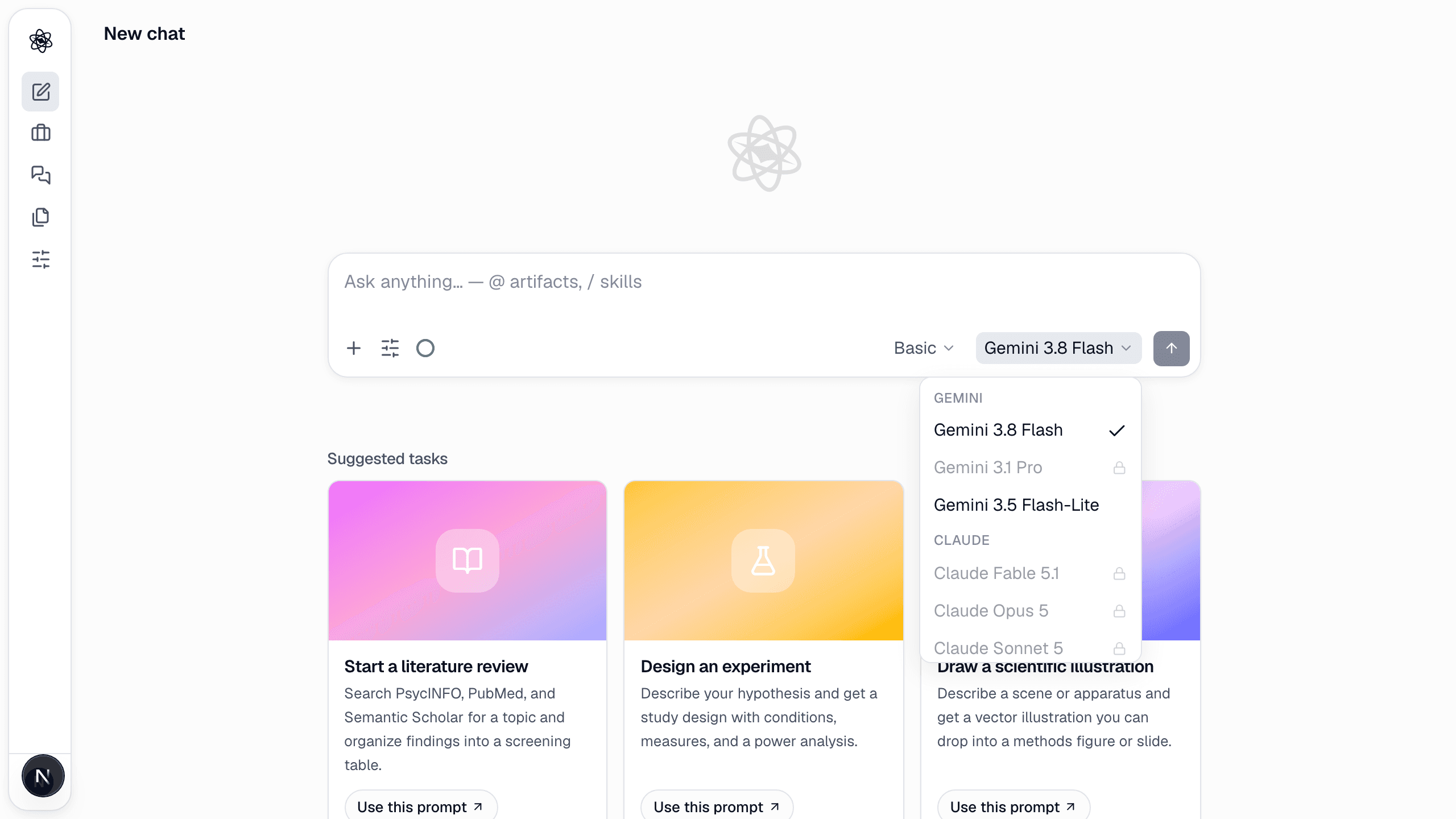
Your choice of model — cloud or local
Pick a model per message from Gemini, Claude, GPT, DeepSeek and Kimi. Local models, and sensitive projects that block cloud providers entirely, come with the desktop app, which is being prepared for release.
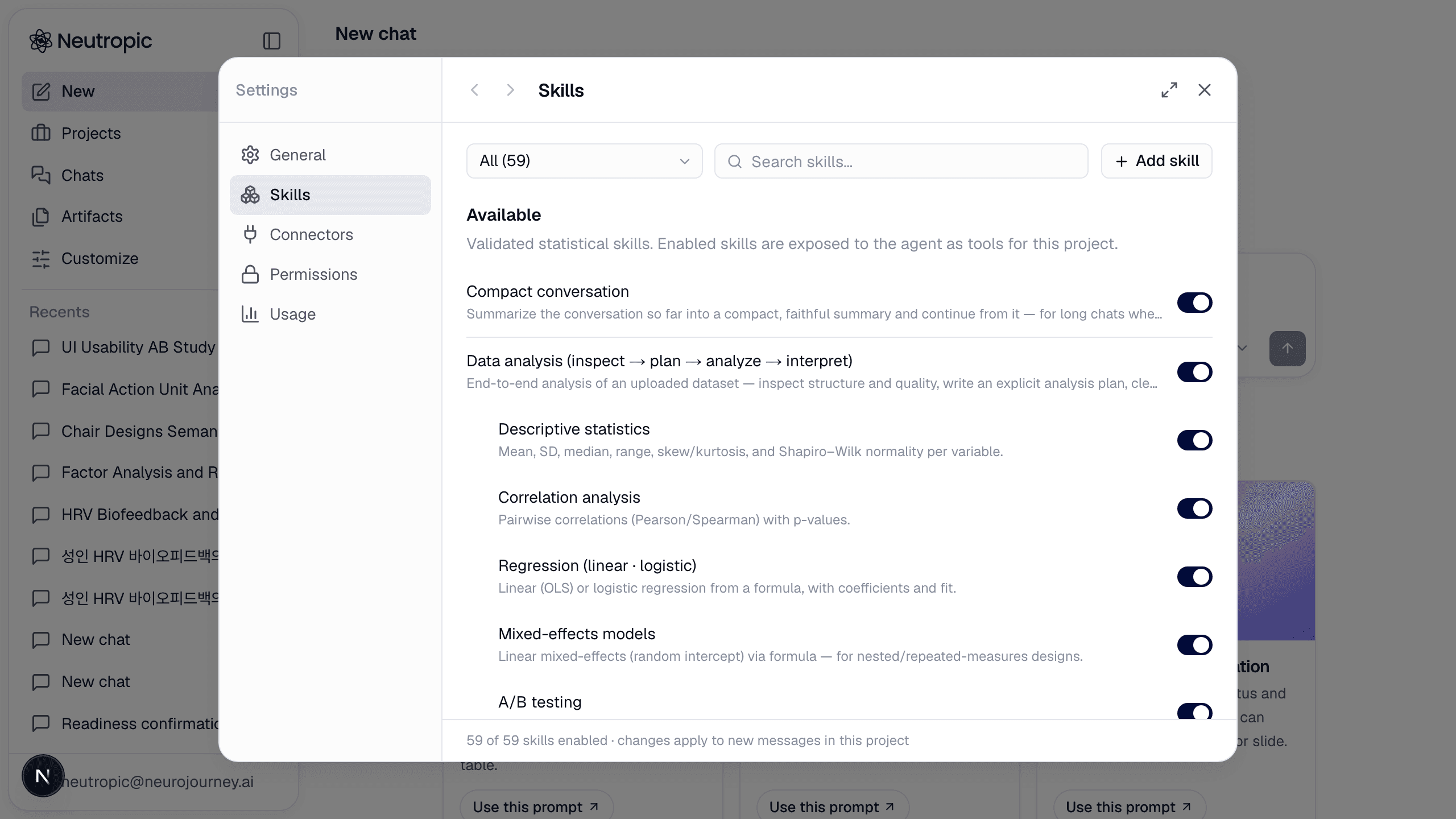
Skills you can see and switch
Fifty-nine validated skills — from descriptive statistics and mixed-effects models to EEG band power and rPPG — are listed in Customize with a toggle each. Turn off what a project shouldn't use; add your own from a Markdown file.
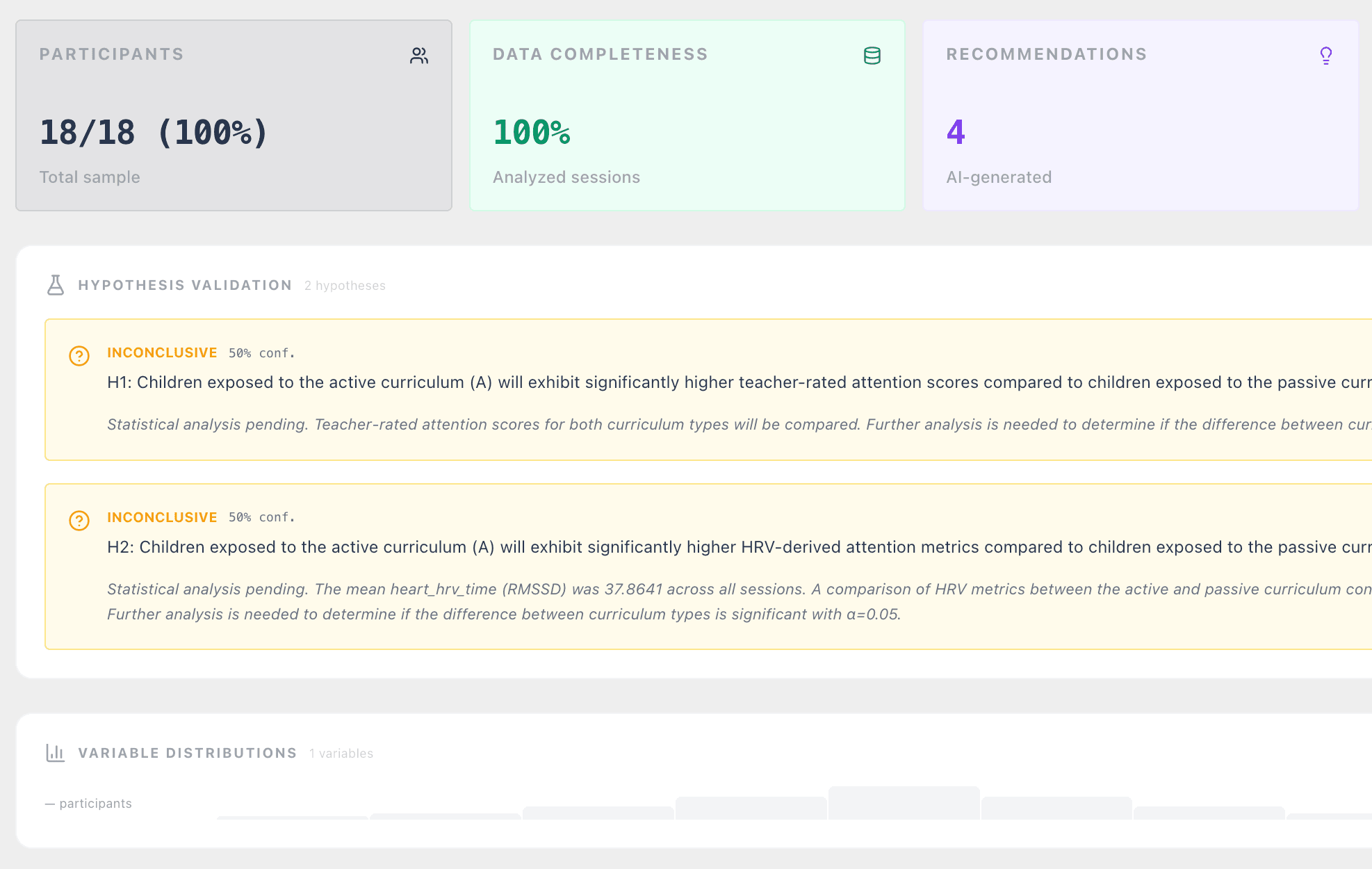
Multimodal by default
Human-sciences data is rarely one table. Neutropic 2.0 treats facial expression, gaze, EDA, HRV, and voice as first-class inputs alongside surveys and behavioral logs, and keeps them aligned on a shared timeline for analysis.
Your research, on every device
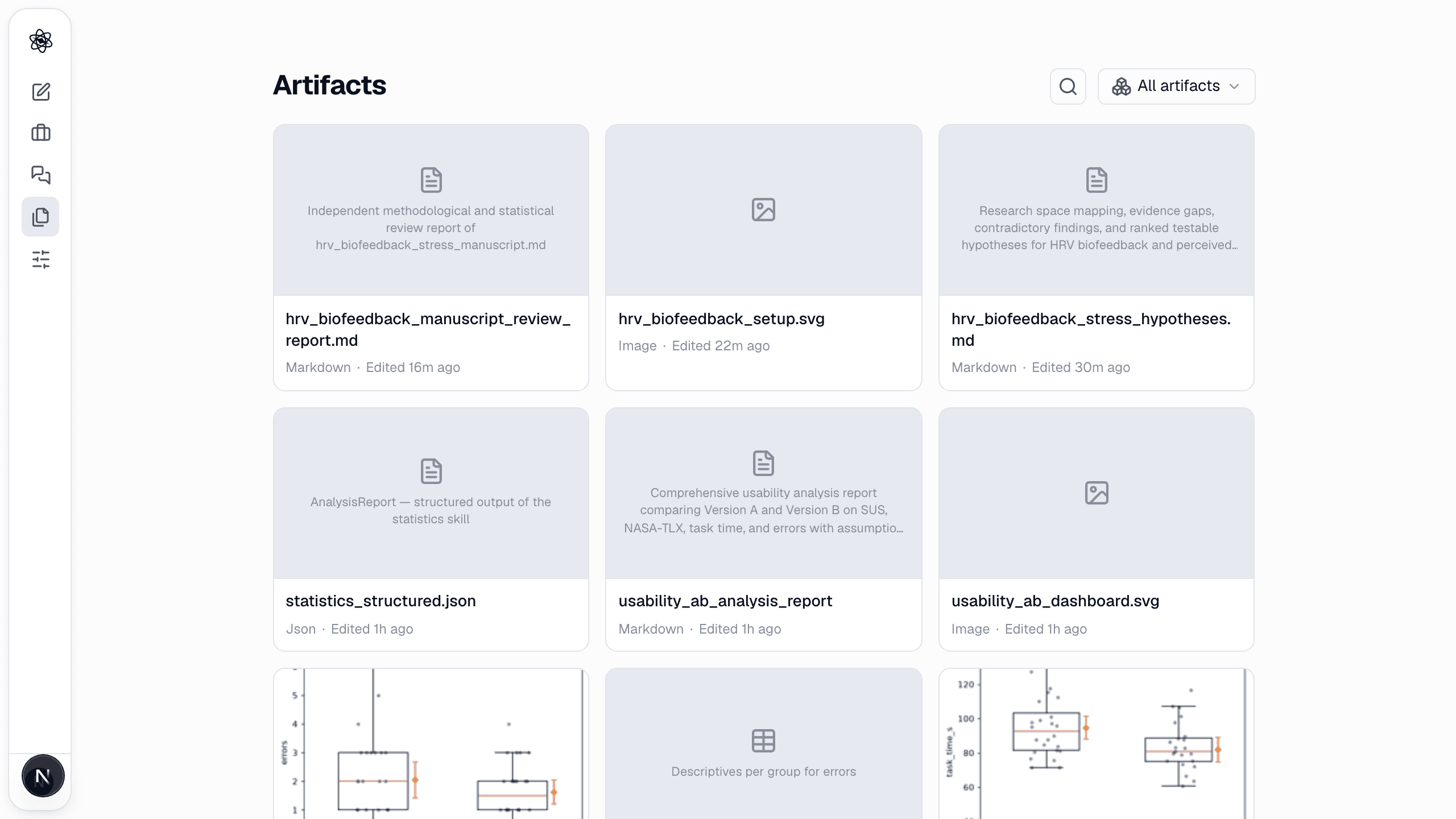
Projects, sessions, conversations, and artifacts now live in your account, not on a single machine. Sign in from the lab workstation, your laptop, or a collaborator's office and you see the same projects in the same state. Raw uploads and code execution stay on the machine doing the work, while outputs are stored with your account so nothing is trapped on one device.
Our goal is simple: the distance between a research question and a defensible answer should be measured in conversations, not weeks.
Available today
Neutropic 2.0 is rolling out to all accounts now. Open the app, create a project, and ask your first research question — the agent takes it from there. To see a full study run end to end, read the Use cases walkthrough.