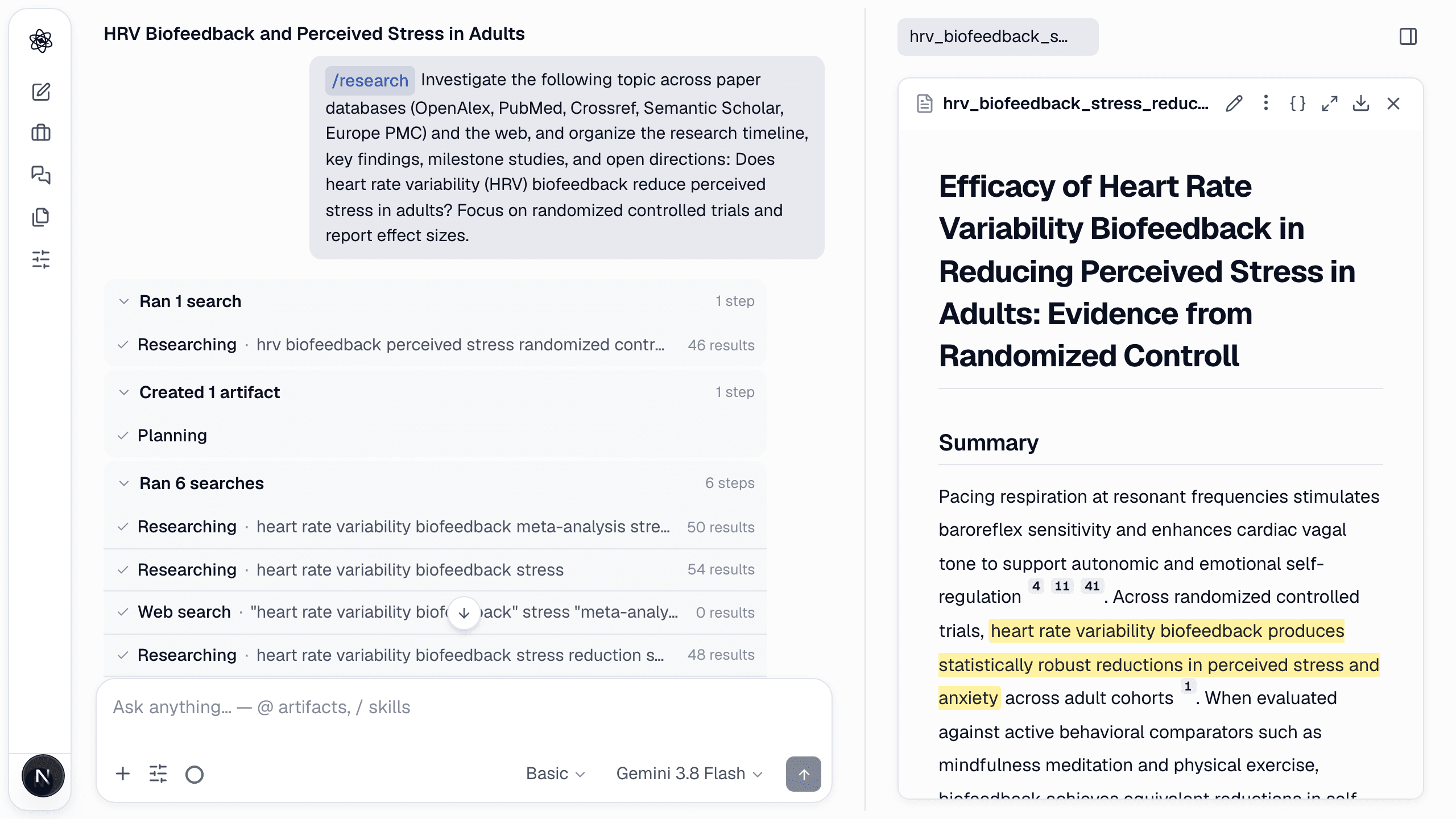
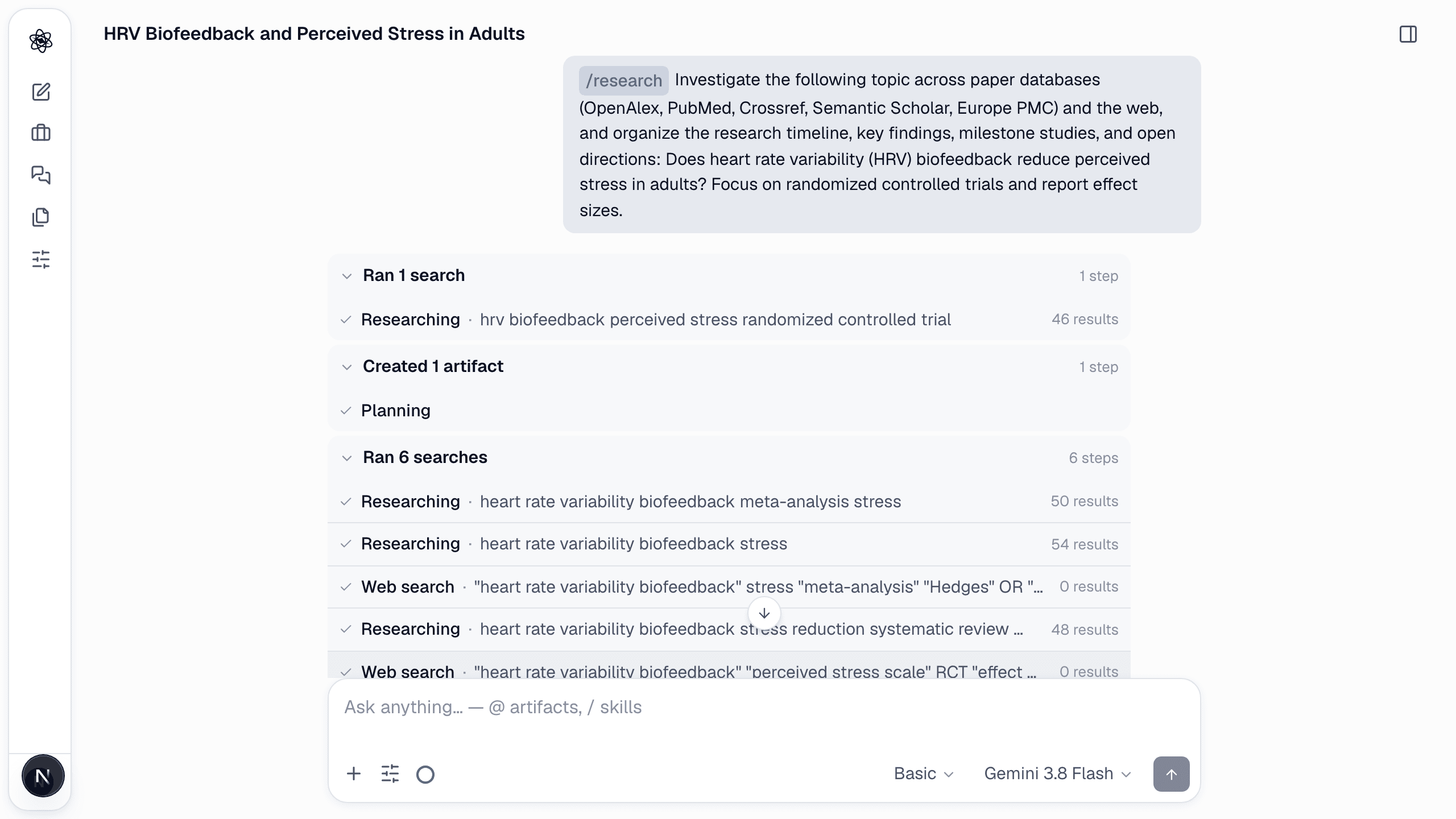
statistics is the hypothesis-testing skill. It never starts with a test: it identifies the design, audits the assumptions, then chooses the method, runs diagnostics and reports effects with uncertainty.
How to call it
text
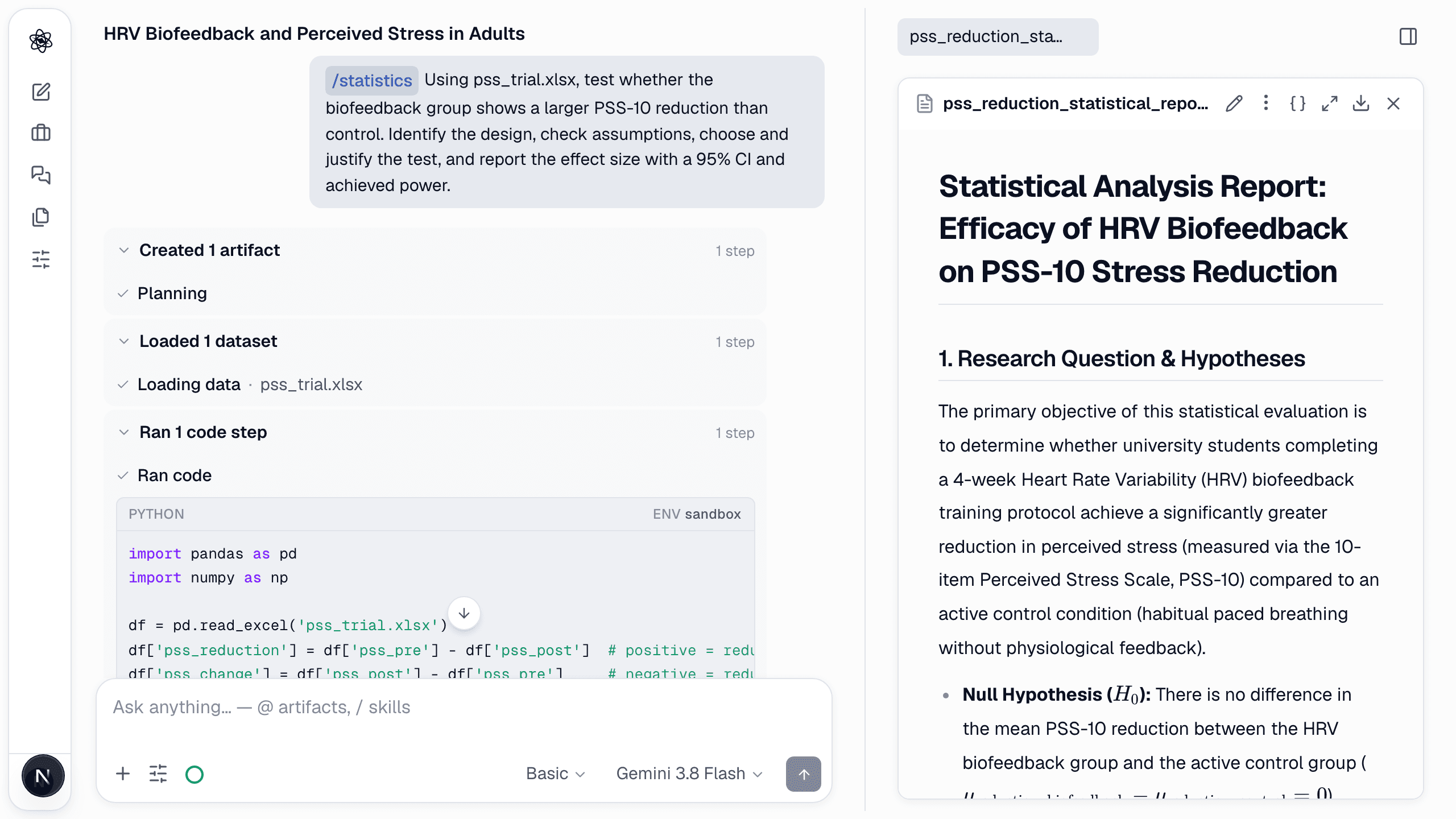
/stats Using pss_trial.xlsx, test whether the biofeedback group shows a larger PSS-10 reduction than control. Check assumptions, choose the appropriate test, and report the effect size with a 95% CI and achieved power.
What happens
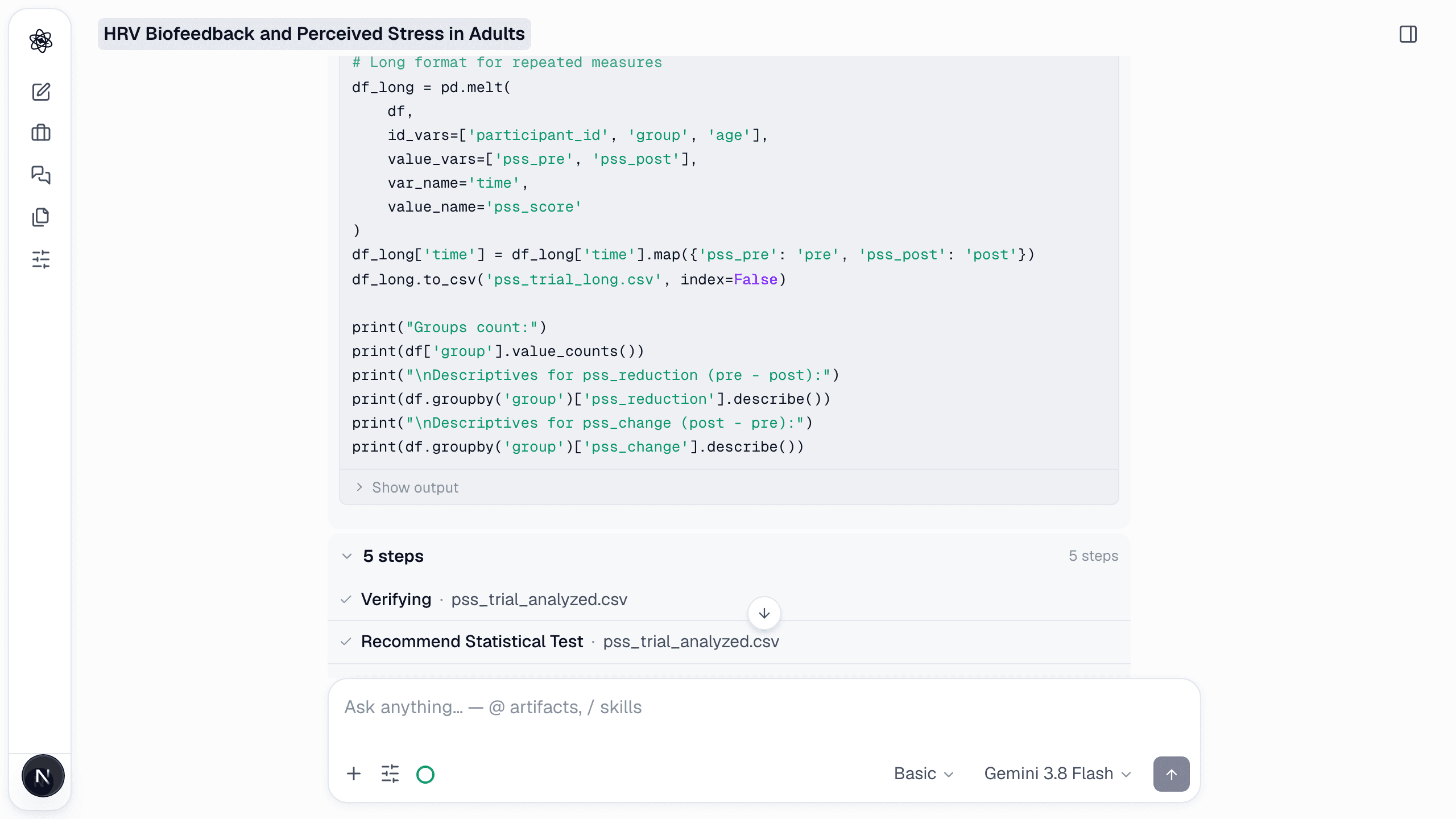
- Design first: groups, repeated measures, covariates, the scale of each variable.
- Assumptions: normality, variance homogeneity, sphericity, independence — reported with the numbers.
- Method: the test or model, justified; parametric ↔ non-parametric switches are explained.
- Diagnostics and effects: effect sizes with CIs, achieved power and design sensitivity, multiple-comparison control.
Method skills it composes
- ttest · anova · power · bayesian (Bayes factor) · stats_tests (parametric ↔ non-parametric selection) · assumptions · effect_size · multiple_comparisons
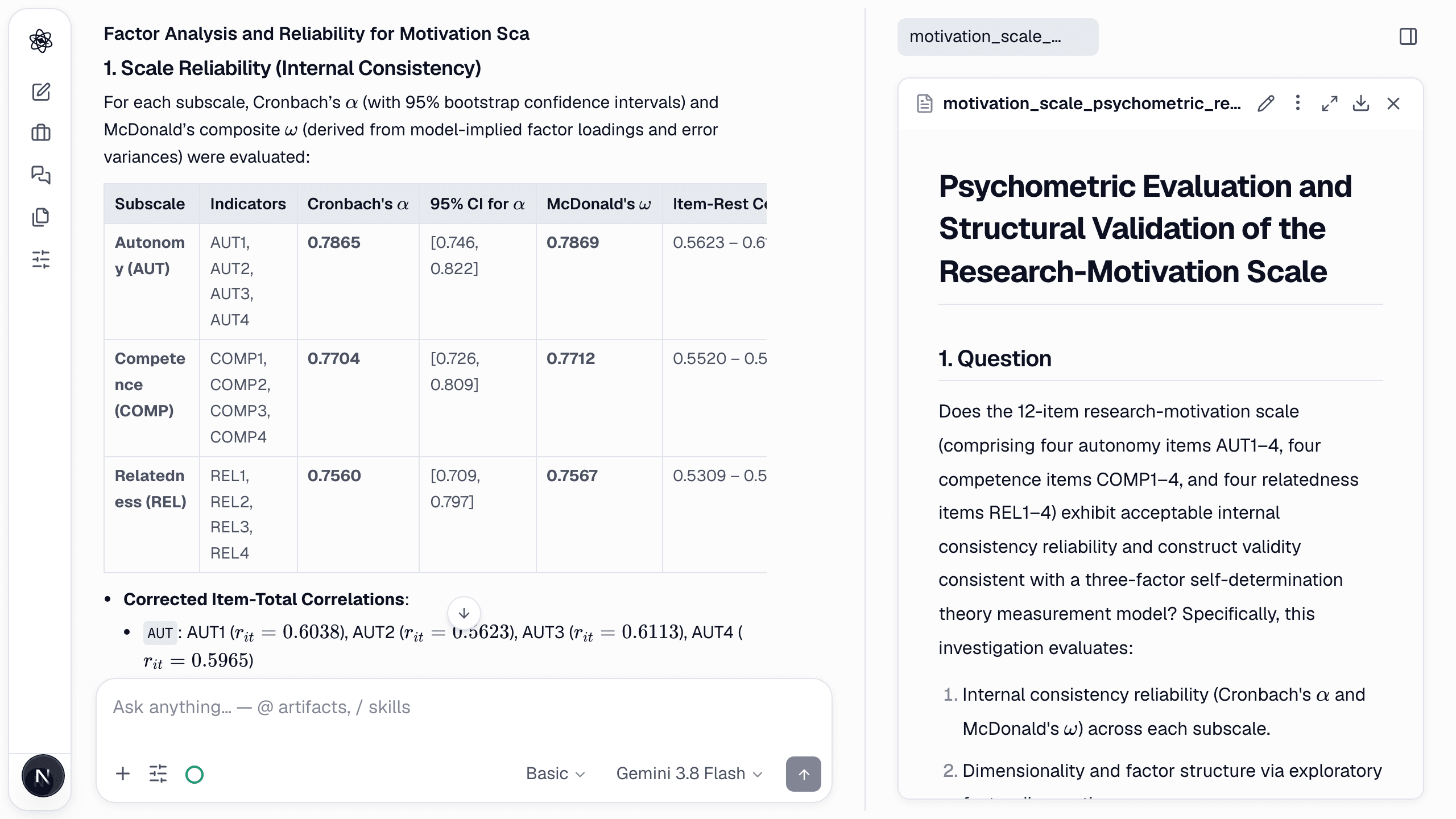
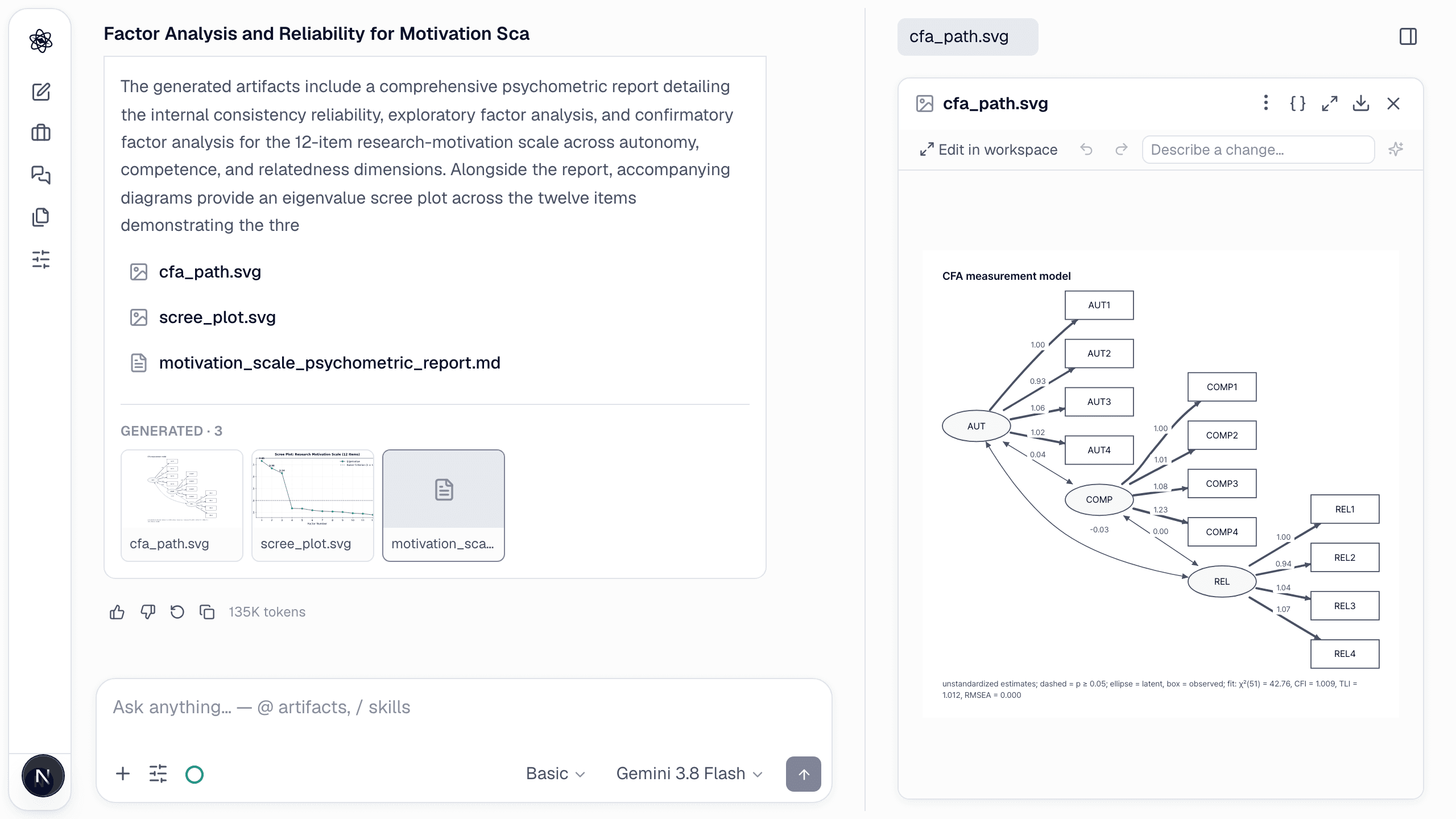
- reliability (α · ω) · efa · cfa · sem · irt
What you get
- The statistical report (Markdown) and a structured result (JSON) the writing step quotes from.
- Plots (power, group comparisons, path diagrams) as editable artifacts.
Tips
- Ask for what a reviewer will ask for — "effect size with a 95% CI and achieved power" — and it is in the report.
- On Deep effort an independent review agent re-checks assumptions, multiple comparisons and sample size before the result is shown.