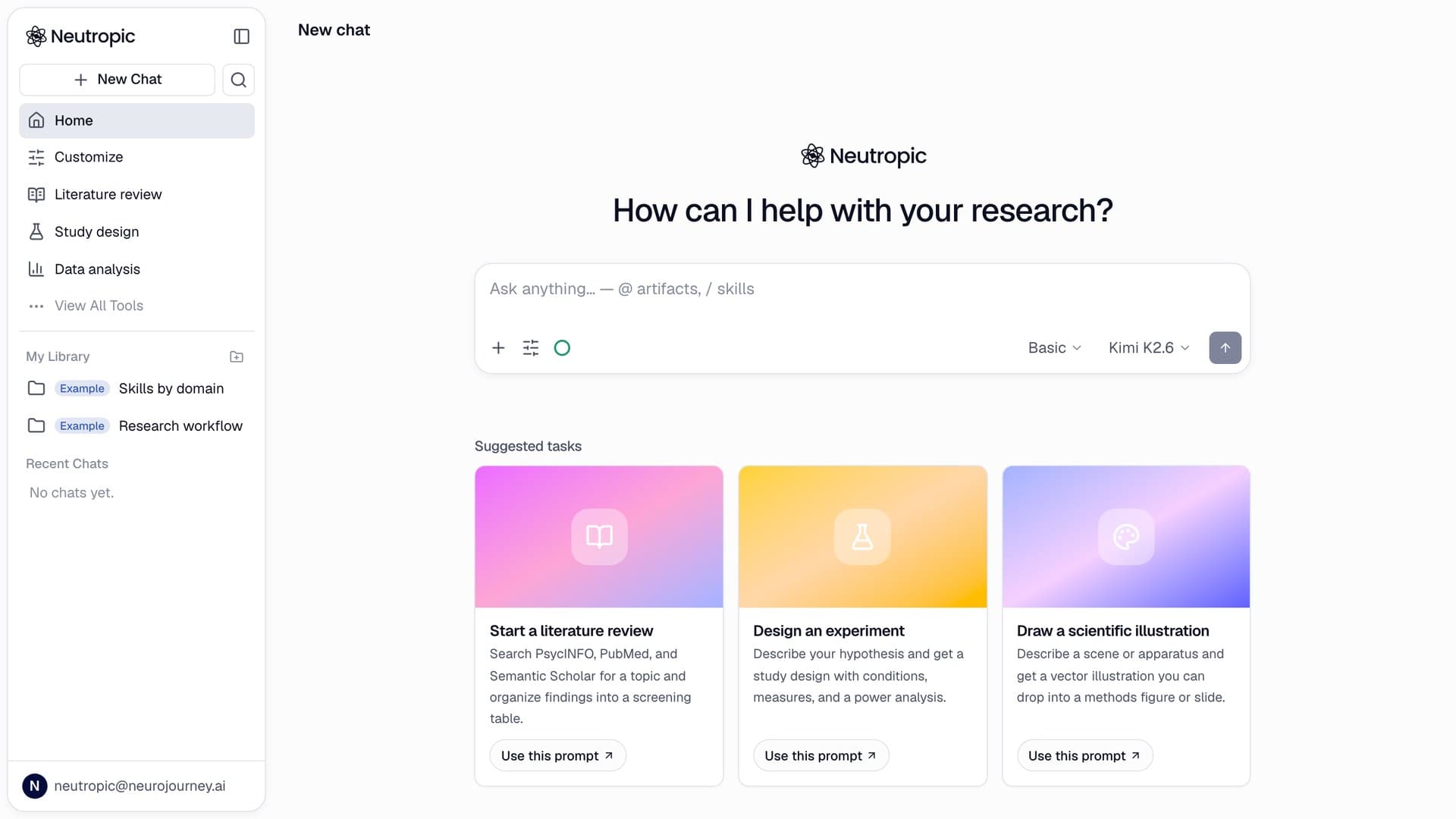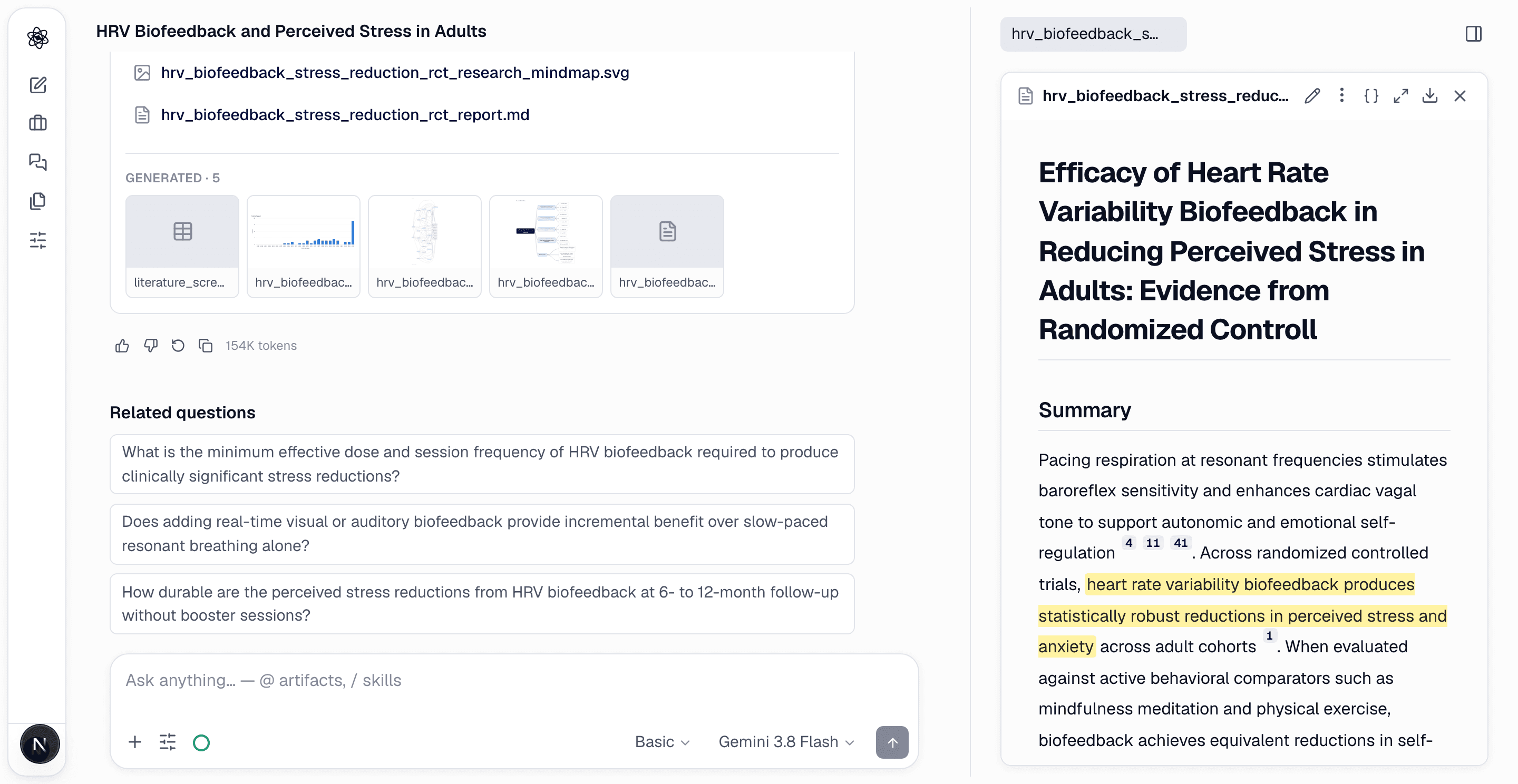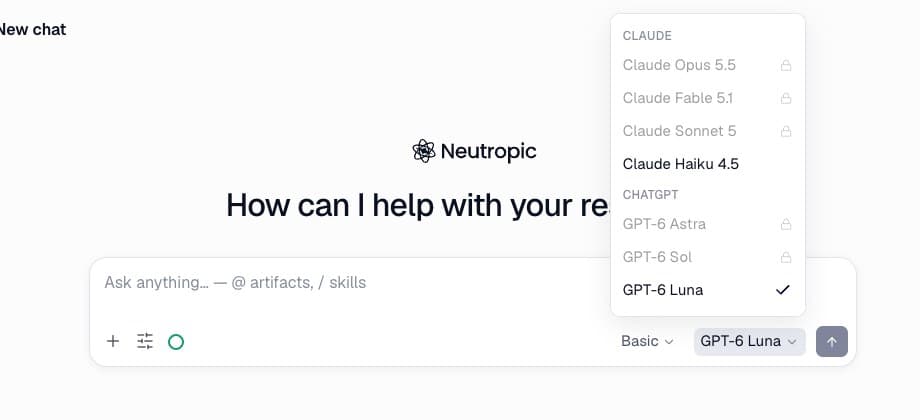
Three new models from OpenAI and Anthropic are available in Neutropic today: GPT-6 Luna, GPT-6 Sol and Claude Opus 5.5. You can pick any of them per message, and they work with every skill — literature review, study design, analysis, figures, writing and review.
What's new
- GPT-6 Luna (OpenAI) — a fast, lightweight model for everyday research work: quick questions, summaries, first drafts and simple analyses. Available on every plan, and now the default on the Free plan.
- GPT-6 Sol (OpenAI) — a strong all-rounder for longer work such as literature reviews, study design and statistics with interpretation. Available on paid plans.
- Claude Opus 5.5 (Anthropic) — Anthropic's newest Opus, bringing quality close to Claude Fable 5.1 at a lower cost. Available on paid plans.
They replace Claude Opus 5 and the GPT-5.6 models in the model menu. If one of those was selected, Neutropic switches you to the default model automatically — nothing to set up.
Which model should I use?
- A quick question, a summary or a first draft — GPT-6 Luna.
- A literature review, an experiment design, or statistics you need explained — GPT-6 Sol or Claude Opus 5.5.
- The most demanding work — manuscripts, Deep-effort research, mock peer review — Claude Opus 5.5, or Claude Fable 5.1 and GPT-6 Astra when you want the very highest quality.
The effort level next to the model (Lite · Basic · Deep) still decides how far each turn goes — how many sources it reads, how long the report is, and whether a reviewer checks the result. Model and effort work together, so a lighter model on Deep is often a good trade.
Free plan: GPT-6 Luna by default
If you're on the Free plan and have never picked a model, your chats now use GPT-6 Luna. Each turn costs less, so your daily allowance covers noticeably more conversations. If you picked a model yourself, we keep your choice. If you upgrade, the default switches back to the paid-plan default.
How to switch
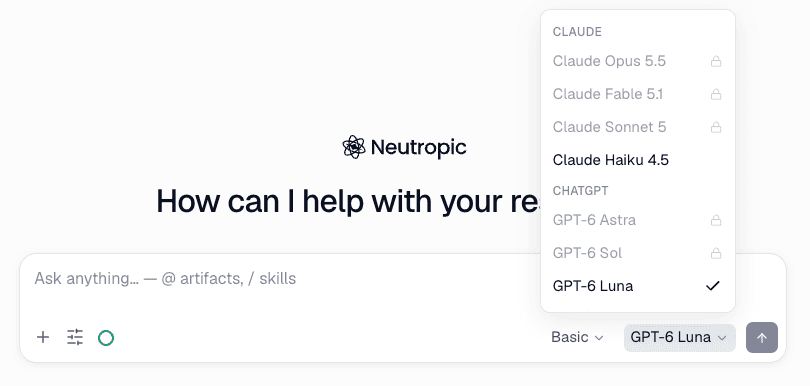
Open the model menu next to the send button and choose a model. Your choice is remembered across chats, and you can change it for any single message.
About credits
Credits are charged for what each turn actually uses, so larger models use more credits per turn than lighter ones. For everyday questions, GPT-6 Luna stretches your allowance furthest; for long analyses, a larger model often finishes the job in fewer turns. See pricing for plan allowances, and the changelog for everything else in this release.