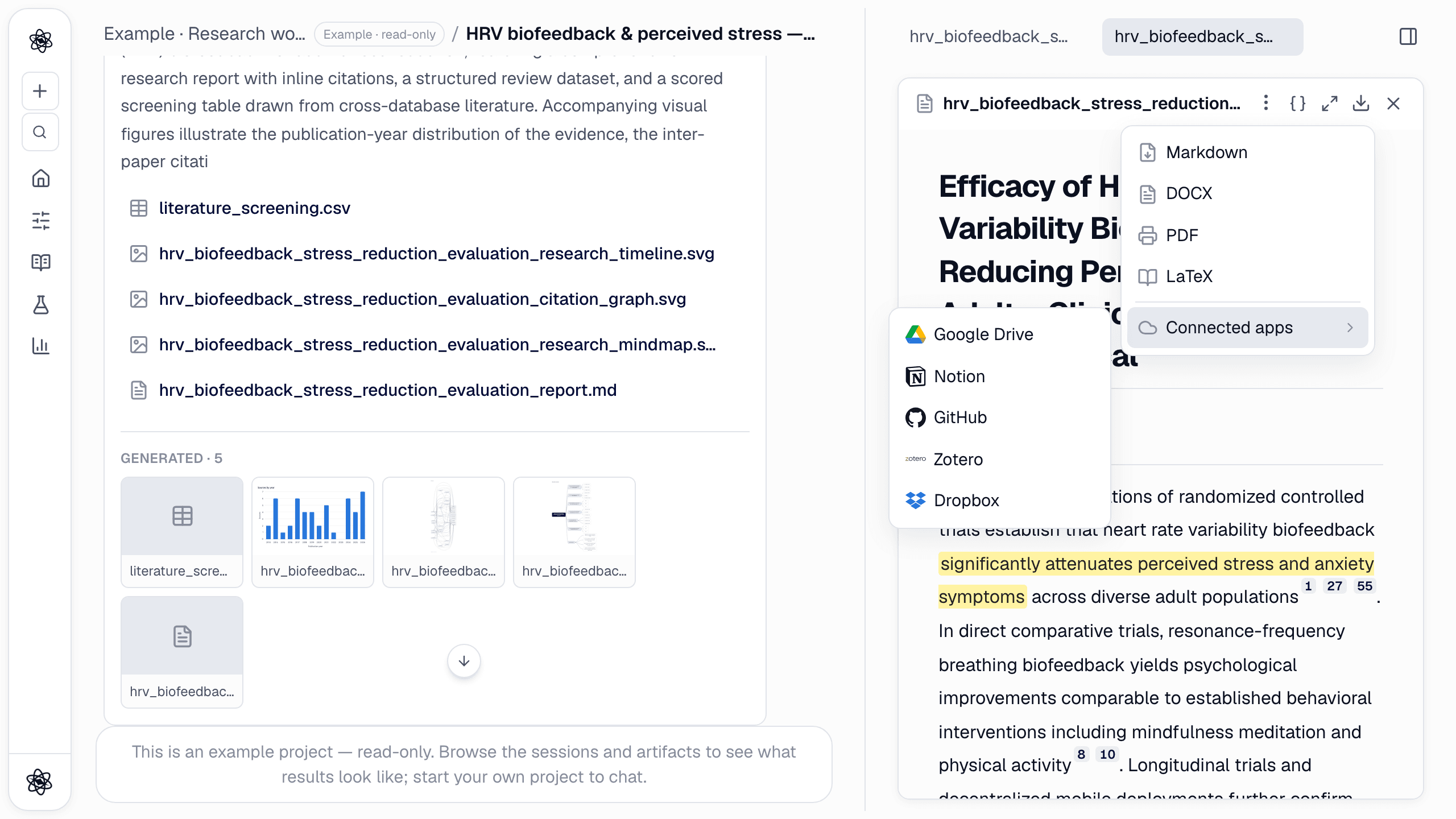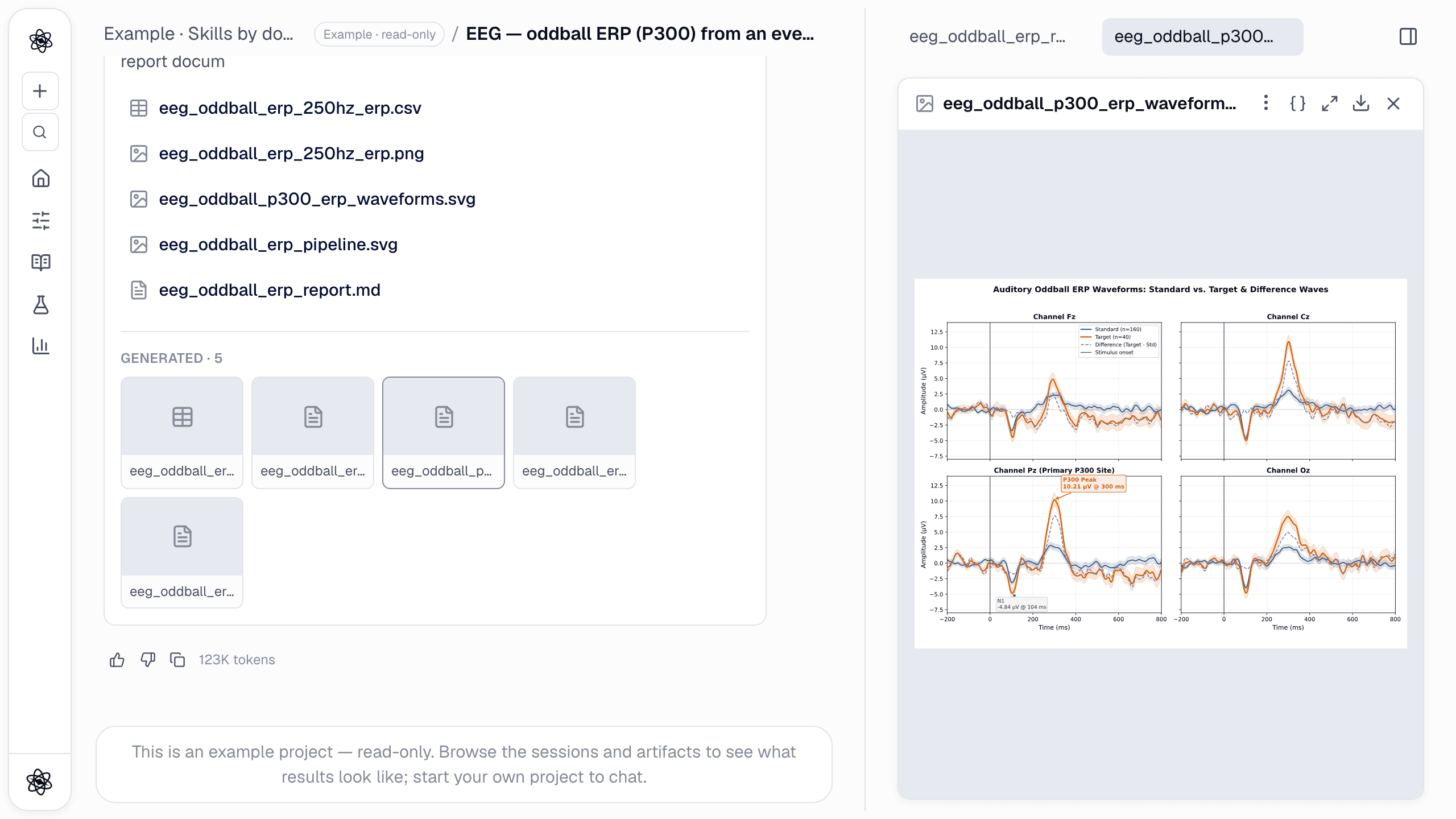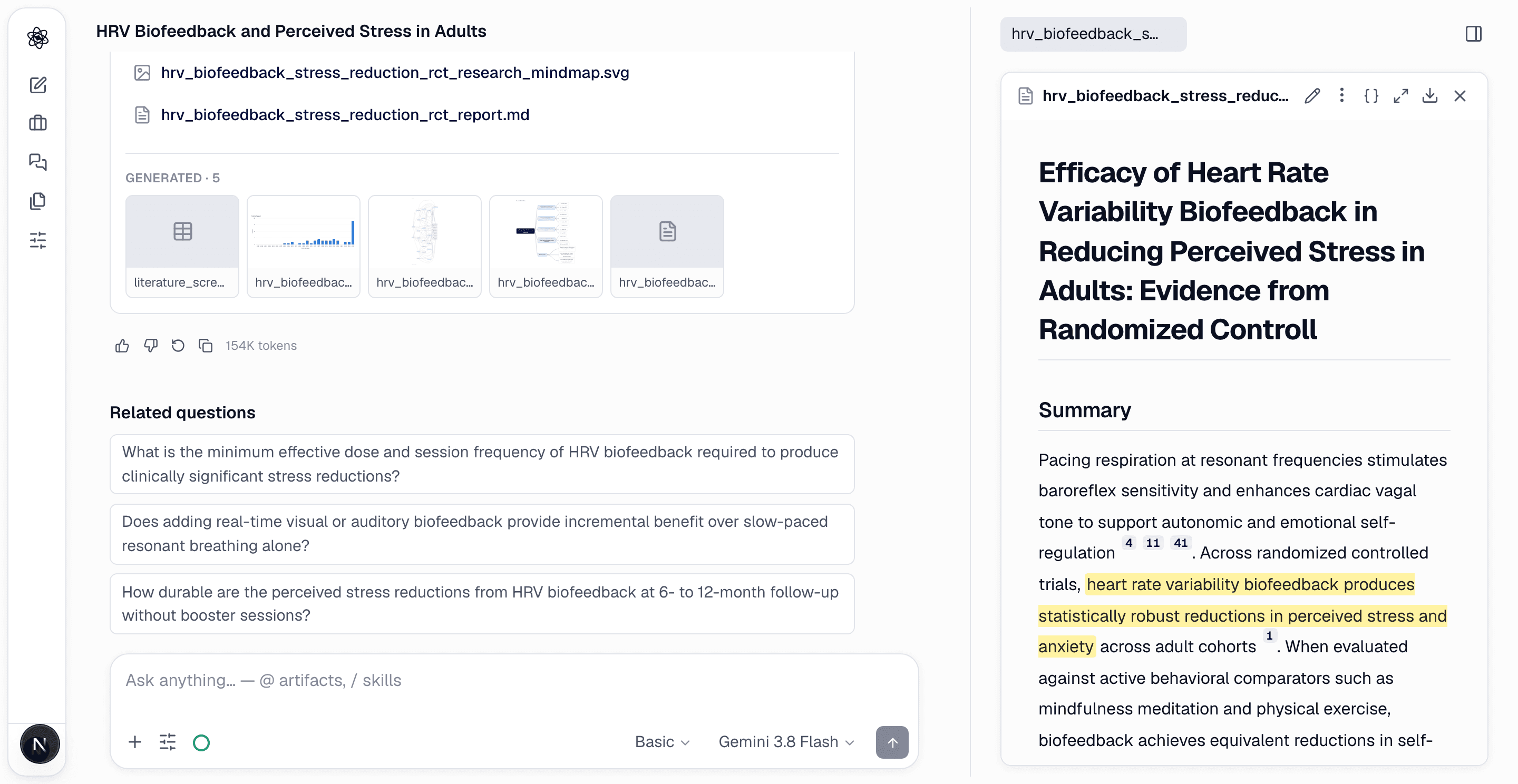
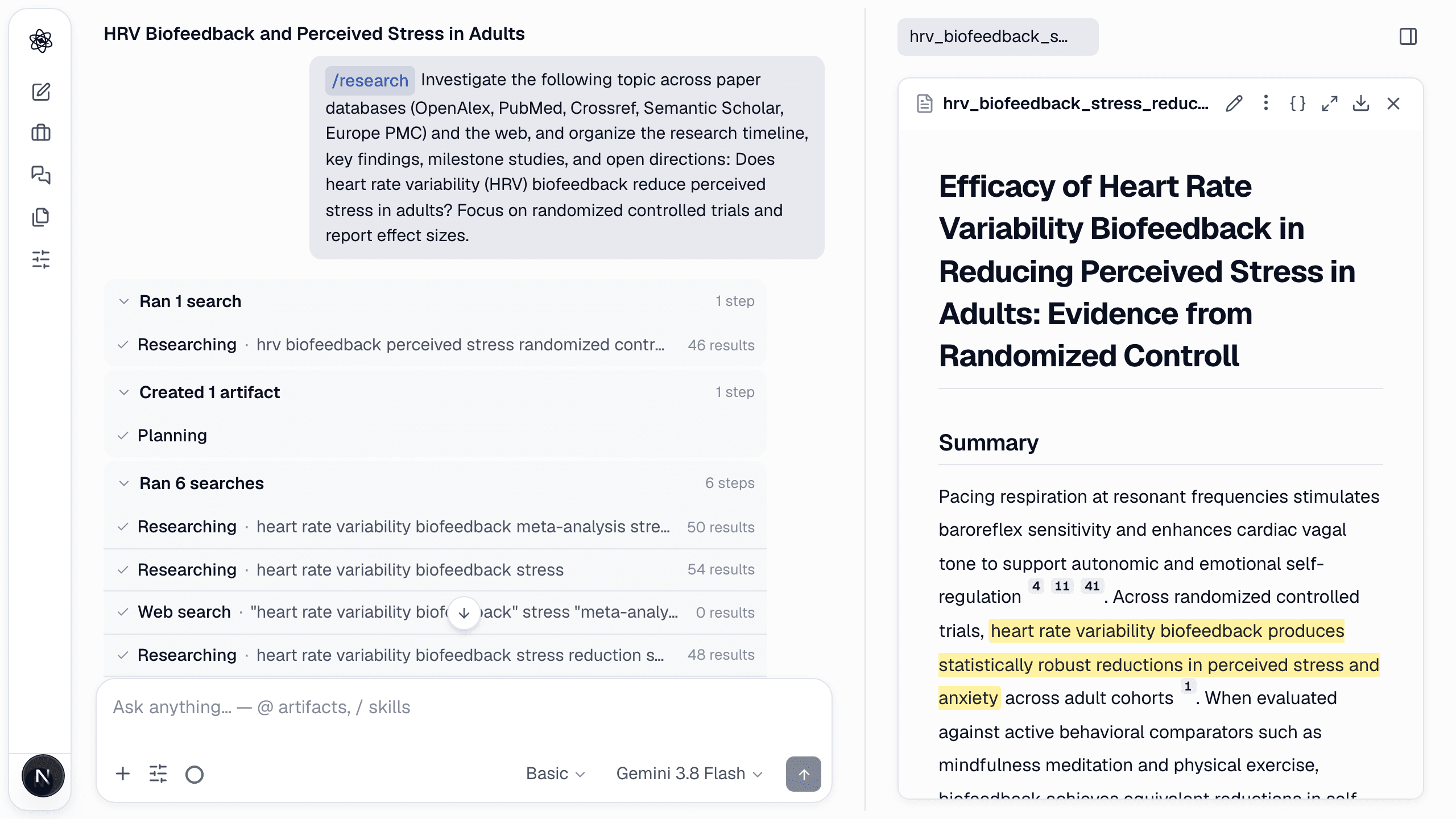
Most literature reviews end where they should begin: a folder of PDFs and a document of quotes, with the actual reasoning — what the field knows, where it disagrees, what to test next — still living in one researcher's head. Neutropic makes that reasoning the product. The screenshots below are from one session on HRV biofeedback and perceived stress.
A synthesis where every sentence is accountable
Ask a question and the agent searches across scholarly databases, then writes a synthesis in which every claim carries an inline citation to a real source. Sentences that no source supports are removed, not smoothed over. Click any sentence to see exactly what it rests on.
The field as a map, not a list
Beyond summaries, Neutropic connects the literature into a structure — theories, variables, methods, and findings, and the relations between them. Contradictory results cluster together instead of hiding on page 40, and unstudied combinations become visible as gaps. In this session the gap analysis surfaced a live disagreement: whether biofeedback adds anything over matched slow breathing, with the studies on each side listed.
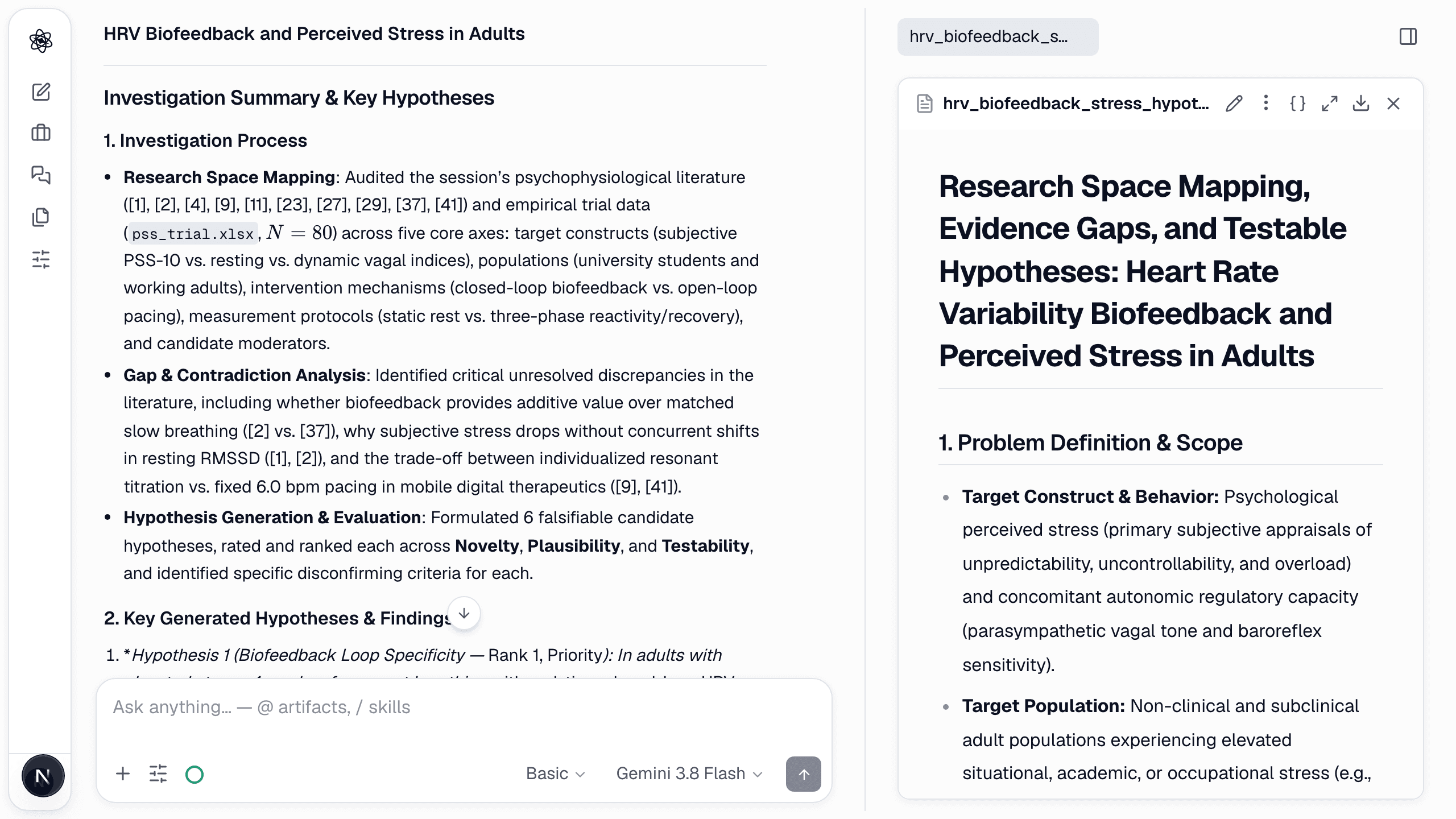
Hypotheses with their rationale attached
From those gaps and conflicts, the agent proposes testable hypotheses — each with its scientific rationale and the supporting references, each debatable and editable — and ranks them by novelty, plausibility and testability, showing the reasoning for the rank.
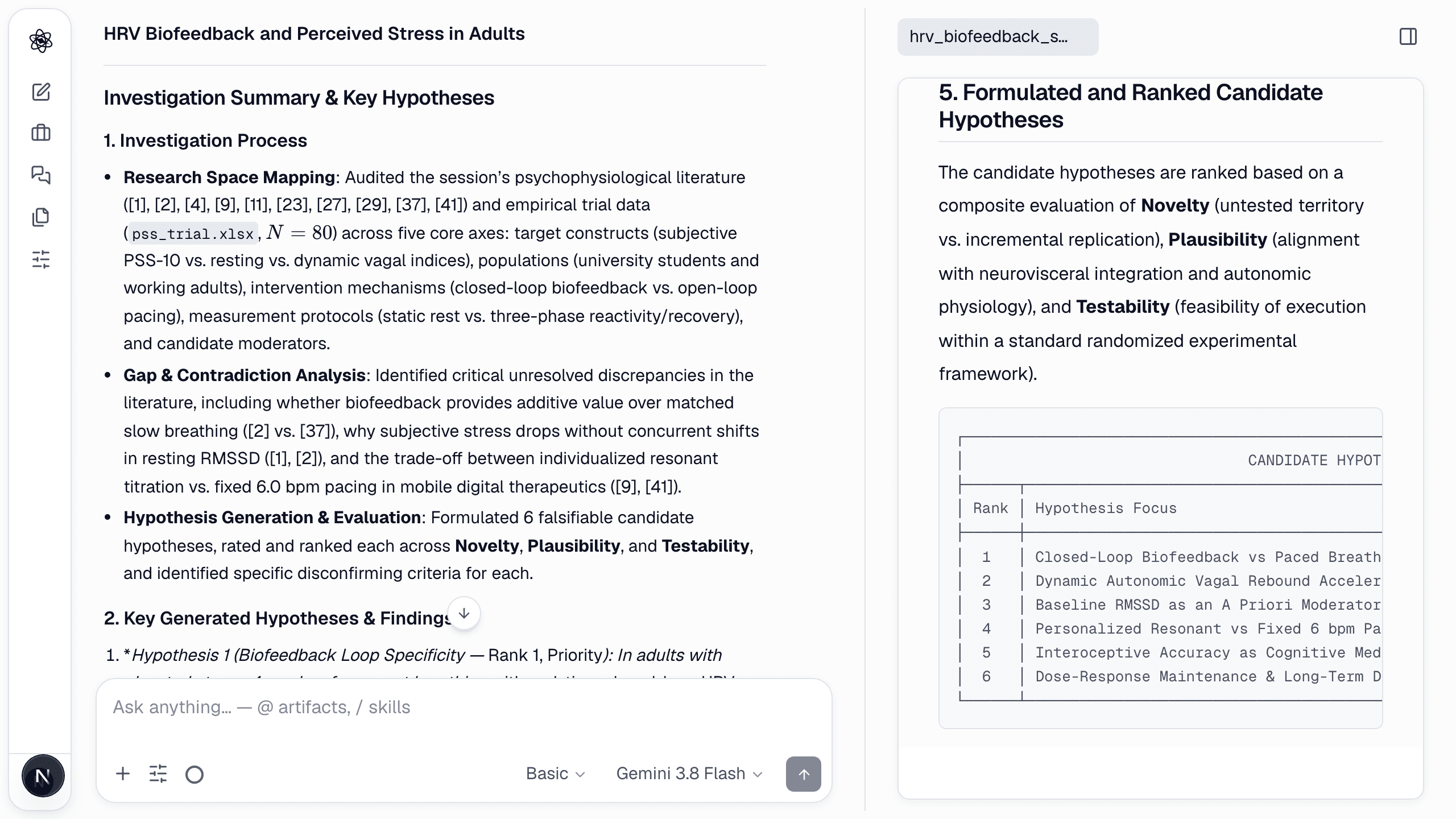
Accept one and it becomes a study
Accept a hypothesis and it flows directly into study design: the agent settles what the hypothesis leaves open — control condition, delivery, secondary measures — from comparable studies, then writes the design document with variables, conditions, measures, sampling, and an analysis plan, citing the reference studies it borrowed from.
The workflow is the point
Nothing here is a disconnected feature. The same evidence that grounded the synthesis grounds the hypotheses, and the same hypotheses shape the design and the eventual analysis — so when a reviewer asks "why did you test this?", the answer is one click deep, not one memory deep. Read the step-by-step posts: literature review, hypothesis building, experiment design.